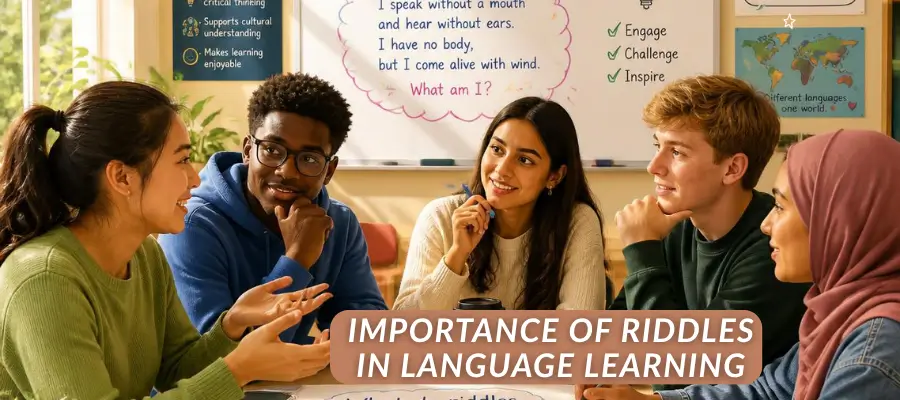
Riddles are fun puzzles that make your brain work in creative ways. They are questions that hide the answer in a tricky form. Many people enjoy solving riddles for entertainment or learning new thinking skills. Knowing how to solve riddles can help you in games school or daily challenges. Riddles improve memory focus and logic skills while making thinking more fun.
This article will guide you step by step that how to solve riddles easily. You will learn techniques tips and tricks for tricky questions. By practicing these methods anyone can become better at solving riddles. Learning how to answer riddles can also be a great mental exercise.
Many riddles have wordplay that confuses readers but hints are always hidden inside. Understanding riddles helps develop problem-solving and creative thinking skills. Riddles can be for children adults or groups and each type has a different challenge. Learning how to solve riddles begins by knowing their structure and clues.
The word riddle comes from the Old English word “raedan,” meaning to interpret or to guess. Throughout history, riddles have appeared in every culture on Earth — in the Bible, in Greek mythology, in Shakespeare’s plays, in folk tales from Africa and Asia, and in modern children’s books and quiz shows.
Riddles serve three main purposes.
- First, they entertain and bring people together through shared mental challenges.
- Second, they educate by teaching lateral thinking, vocabulary, and problem-solving skills.
- Third, they develop the brain by creating new neural pathways through creative thought.
Before diving into techniques, it is worth understanding why riddle-solving is such a valuable skill to develop.
Improves Critical Thinking — Riddles force your brain to examine a problem from multiple angles simultaneously. This kind of multi-perspective thinking is exactly what employers, educators, and leaders look for in high performers.
Boosts Vocabulary and Language Skills — Most riddles rely on wordplay, double meanings, and clever use of language. Regular exposure to riddles dramatically expands your understanding of how language works.
Enhances Memory — Remembering clues, patterns, and previous riddle solutions builds stronger memory pathways in the brain.
Reduces Mental Decline — Studies consistently show that people who regularly engage in mental challenges like riddles, crosswords, and puzzles maintain sharper cognitive function as they age.
Develops Patience — Learning to sit with a problem without panicking or giving up is one of the most valuable life skills a person can develop.
Builds Confidence — Every riddle you solve gives you a small but genuine confidence boost that adds up over time.
Different types of riddles
There are many types of riddles that challenge your brain differently. Some are tricky riddles with answers that require careful thinking. Word riddles use language and puns to hide answers cleverly. Logic riddles need reasoning and step-by-step thought to solve. Funny riddles are entertaining and sometimes very simple to answer.
There are also spider-themed riddles or themed riddles that make guessing fun. Some riddles for kids focus on imagination while riddles for adults may need critical thinking. Understanding the type of riddle helps in applying the right strategy. Knowing the type is an important step in how to answer riddles successfully.
Why solving riddles is important?
Solving riddles is more than fun it helps develop mental skills. Riddles improve memory focus and concentration over time. They also boost creative thinking and problem-solving abilities. People use riddles in classrooms to enhance learning and retention. Solving tricky riddles improves confidence in logical thinking and decision-making.
Riddles for kids help develop cognitive skills and attention to detail. Adults benefit from tricky riddles with answers to exercise their brain. Learning how to answer riddles can make daily thinking easier and more effective. Regular practice of riddles trains your mind to spot patterns and hidden clues.
Read the riddle slowly
The first step to solve riddles is reading them slowly and carefully. Every word in a riddle matters and gives meaning. Many riddles use simple words with hidden clues. Skipping words can lead to wrong answers. Reading twice helps you notice details. This step is very important for beginners. Careful reading improves accuracy in how to answer riddles.
Example riddle:
What has a face and two hands but no arms or legs
Answer: A clock
Explanation:
The words face and hands are clues. Reading slowly helps connect these clues. A clock has a face and hands but no body parts.
Look for hidden meaning
Riddles often do not mean what they say directly. Words can have double meanings in riddles. Thinking beyond the obvious helps find the answer. This is common in tricky riddles with answers. Hidden meaning makes riddles fun and challenging. Training your mind to spot it improves skill. This step is key in how to answer riddles.
Example riddle:
What goes up but never comes down
Answer: Your age
Explanation:
The riddle does not talk about objects. It talks about life. Age only increases and never goes down.
Think creatively not literally
Some riddles cannot be solved with logic alone. Creative thinking helps you imagine different meanings. Do not stick to one idea too quickly. Ask yourself if the riddle could mean something else. This works well for wordplay riddles. Creativity makes solving riddles easier. This skill improves with practice.
Example riddle:
I speak without a mouth and hear without ears. What am I
Answer: An echo
Explanation:
An echo does not have a body. Thinking creatively helps you find the answer.
Break the riddle into parts
Long riddles become easier when broken into small parts. Focus on one clue at a time. Understand each line separately. Then connect the clues together. This method works well for hard riddles. It reduces confusion and stress. This technique strengthens how to answer riddles.
Example riddle:
I have cities but no houses. I have rivers but no water. What am I
Answer: A map
Explanation:
Cities without houses and rivers without water point to a map. Breaking clues helps reveal the answer.
Use logic and common sense
Some riddles depend on simple logic. You must think step by step. Remove impossible answers first. Use common sense to test ideas. Logic riddles improve reasoning skills. This step helps adults and learners alike. Logical thinking supports how to answer riddles correctly.
Example riddle:
If you drop me I crack but if you smile at me I smile back. What am I
Answer: A mirror
Explanation:
A mirror breaks when dropped and reflects a smile. Logic connects both clues clearly.
Practice with easy riddles first
Starting with easy riddles builds confidence. Easy riddles teach patterns and clue types. They prepare you for harder riddles later. Kids and beginners benefit from this approach. Spider riddles for kids are good practice tools. Confidence grows with success. Practice strengthens how to answer riddles naturally.
Example riddle:
What has legs but cannot walk
Answer: A table
Explanation
The word legs is used differently. Easy riddles help understand such tricks.
Do not rush your answer
Rushing leads to mistakes in riddles. Take a moment to think calmly. Riddles reward patience and focus. Fast guesses often miss hidden clues. Slowing down improves accuracy. This habit improves results over time. It is an important habit in how to solve riddles.
Example riddle:
What can travel around the world while staying in one place
Answer: A stamp
Explanation:
Thinking calmly helps realize the stamp stays on an envelope while traveling.
Review answers to learn patterns
Reviewing solved riddles helps learning. You start noticing common tricks and clues. Patterns repeat in many riddles. This builds long term skill. Writing answers helps memory. Reviewing improves speed and accuracy. This step completes the learning process of how to answer riddles.
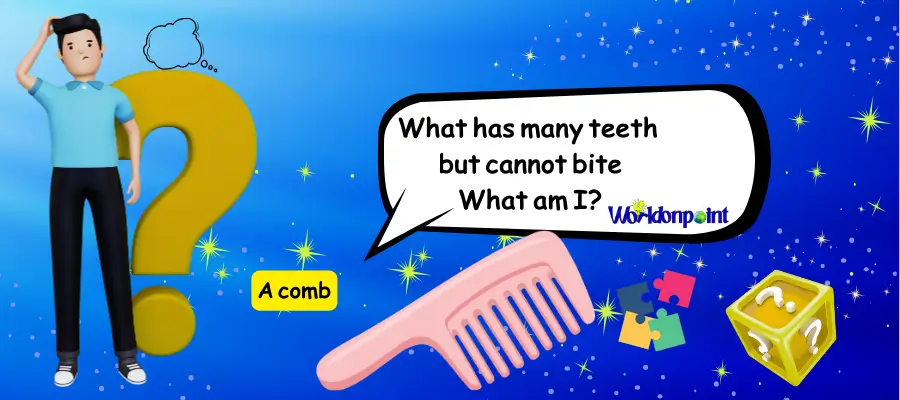
How to Analyse a Riddle Like an Expert?
Here is the exact framework that expert riddle-solvers use, broken down into five clear steps:
Step 1 — Read Completely: Read the entire riddle without stopping or guessing.
Step 2 — Identify Clues: Extract every descriptive word or phrase that gives information about the answer.
Step 3 — List Possibilities: Write down or mentally note three to five possible answers based on the clues.
Step 4 — Test Each Answer: Run each possible answer against every clue in the riddle and eliminate those that fail.
Step 5 — Verify and Confirm: State your final answer and check that it satisfies every single clue without exception.
This five-step framework works for every type of riddle and every difficulty level. With practice, you will complete all five steps automatically in a matter of seconds.
Common Mistakes That Stop People from Solving Riddles
Understanding what NOT to do is just as important as knowing what to do. Here are the most common riddle-solving mistakes and how to avoid them:
Rushing to Answer — Taking the first thought that comes to mind without examining the clues carefully. Solution: Always read the riddle at least twice before attempting an answer.
Overthinking — Making the riddle far more complicated than it actually is. Solution: After exploring complex possibilities, always check the simplest possible answer.
Ignoring Small Words — Overlooking words like “always,” “never,” “some,” and “only” that dramatically change the meaning of a riddle. Solution: Pay special attention to qualifying words.
Sticking with the First Interpretation — Refusing to abandon an initial reading even when it is clearly not working. Solution: Force yourself to try at least three completely different interpretations.
Not Considering Wordplay — Treating every word at face value without considering double meanings. Solution: For every key word, always ask what else it could mean.
Giving Up Too Soon — Abandoning a riddle after just a few seconds of thinking. Solution: Commit to spending at least three to five minutes on any riddle before looking at the answer.
How to Get Better at Solving Riddles: A Practice Plan?
Like any skill, riddle-solving improves dramatically with consistent practice. Here is a practical weekly plan for developing your riddle-solving abilities:
Day 1 and Day 2 — Warm Up With Easy Riddles: Start with simple “What Am I” riddles that have obvious answers. Focus on identifying the clues correctly rather than guessing quickly.
Day 3 and Day 4 — Tackle Wordplay Riddles: Spend time specifically on conundrum and trick riddles that use double meanings. This trains your brain to automatically consider multiple meanings for every word.
Day 5 — Challenge Yourself With Logic Riddles: Attempt two or three logic riddles that require structured reasoning. Write down your thinking process step by step.
Day 6 — Try Lateral Thinking Puzzles: Work on lateral thinking riddles that require you to completely abandon conventional assumptions. These are the most challenging but also the most rewarding.
Day 7 — Review and Reflect: Look back at any riddles you could not solve during the week. Now that some time has passed, attempt them again. Notice whether the answers come more easily after the incubation period.
Following this plan consistently for just four weeks will produce a noticeable improvement in your riddle-solving speed and accuracy.
Riddles for Different Age Groups
Riddles are not one-size-fits-all. The type and complexity of riddle appropriate for a child is very different from what challenges an adult. Here is a quick guide:
Ages 4 to 7 — Simple What Am I Riddles: Short riddles with one obvious clue. Focus on animals, food, and everyday objects. The goal is fun and introduction to the concept of clues.
Ages 8 to 12 — Two-Clue Riddles: Riddles with two clues that require combining information. Introduction to wordplay and double meanings. Zoo riddles, weather riddles, and nature riddles work brilliantly at this age.
Ages 13 to 17 — Logic and Lateral Thinking: Teenagers thrive on riddles that challenge their assumptions and require structured logical reasoning. Mathematical riddles and detective-style logic puzzles are ideal.
Adults — Complex Multi-Clue Riddles: Adults benefit from riddles that combine wordplay, logic, and lateral thinking simultaneously. Cryptic crossword clues represent the ultimate adult riddle challenge.
Seniors — Memory and Pattern Riddles: Older adults benefit most from riddles that stimulate memory recall and pattern recognition, supporting long-term cognitive health.
The Educational Benefits of Riddles in the Classroom
Teachers and educators around the world use riddles as powerful teaching tools for good reason. Here is what research and classroom experience consistently show:
Riddles improve reading comprehension by forcing students to read carefully and extract meaning from dense text. They build vocabulary by exposing students to unusual words used in creative contexts. They develop mathematical thinking when number-based riddles are used regularly. They encourage classroom participation because riddles create a low-pressure, fun atmosphere where even shy students feel comfortable contributing.
Starting every class with a single riddle takes less than three minutes and consistently improves student engagement, attention, and enthusiasm for the lesson ahead. It is one of the highest-return-on-investment teaching strategies available to any educator.
Tips on how to solve riddles
Reading the riddle carefully is the first step in solving it. Pay attention to each word as riddles often hide clues. Think from different angles and do not guess too fast. Use both logic and imagination to find the correct answer. Break the riddle into smaller parts to understand it clearly. Look for hidden meanings and patterns in tricky riddles.
Remember practice makes solving riddles easier and faster. Applying these techniques helps anyone learn how to answer riddles with confidence and accuracy.
Read carefully and understand
Rushing to answer a riddle often leads to mistakes. Reading carefully helps you catch the hidden hints. Every word in a riddle may point to the answer. Some riddles use wordplay or puns to confuse the reader. Understanding the question fully before thinking of an answer is key.
Taking your time makes it easier to find patterns or logical clues. Many beginners fail because they do not focus on details. Practicing careful reading is an important part of how to answer riddles.
Think creatively
Creative thinking is essential to solve tricky riddles. Some riddles use imagination instead of logic to hide the answer. Visualizing the problem in your mind often helps. Asking what if questions can give new insights. Practice thinking outside the box for better results.
Some spider riddles for kids encourage imagination and observation. Using creativity along with reasoning improves riddle-solving skills. Learning how to answer riddles creatively helps in both fun and real-life situations.
Use logic and reasoning
Logic is important for riddles that have structured answers. Break the riddle into smaller steps to analyze it clearly. Check each statement for hints or contradictions. Some riddles need mathematical thinking or sequencing. Logical riddles train your mind to spot solutions efficiently. Avoid overthinking simple riddles as it can confuse you.
Combining logic and creative thinking increases your accuracy in solving riddles. Understanding patterns and reasoning is a core step in how to answer riddles.
Common mistakes when answering riddles
Many people make mistakes when solving riddles which slows learning. Rushing to answer often causes wrong guesses. Ignoring hidden hints in words leads to confusion. Overthinking can make simple riddles seem too hard. Not practicing regularly reduces your confidence and skill. Some skip reading carefully missing key clues.
Recognizing mistakes helps in learning how to solve riddles correctly. Avoiding these common errors makes riddle-solving easier and more enjoyable. Regular practice with focus builds skill naturally.
How practice improves your riddle skills?
- Daily practice makes solving riddles faster and easier.
- Practicing tricky riddles with answers trains your brain to spot patterns.
- Short sessions every day improve concentration and memory.
- Trying riddles with friends or family increases fun and learning.
- Writing down challenging riddles and reviewing answers helps skill growth.
- Practice builds confidence in answering both simple and tricky riddles.
- Over time practice develops both creative and logical thinking skills.
- Consistent effort improves your understanding of how to solve riddles naturally.
Fun games and activities to improve riddle skills
Playing riddle games makes learning enjoyable and effective. You can organize riddle competitions with friends or family. Mobile apps and books provide daily riddles for practice. Making your own riddles helps understand hidden clues and patterns. Solving riddles in groups encourages teamwork and discussion.
Using riddles in school or at home enhances brain skills and thinking speed. Fun activities train your mind while providing entertainment. Practicing these ways helps anyone learn how to answer riddles faster.
1. How to answer riddles with answers
This means learning the correct way to solve riddles and get the right solution. Some riddles are tricky, so knowing the answer helps you understand the logic. People use this to practice solving riddles faster and learn common patterns. For example, if a riddle asks, “What has keys but cannot open doors?” the answer is a piano.
Practicing riddles with answers makes your brain smarter. It also shows you how riddles hide clues in the wording. This approach is useful for both beginners and advanced learners.
2. How to answer riddles in english
This focuses on solving riddles written in the English language. Riddles often use wordplay, puns, or phrases that are tricky. Knowing English grammar and vocabulary helps you spot clues. For example, understanding the double meaning of words can lead to the correct answer.
Children or learners often practice riddles in English to improve language skills while having fun. It also trains your brain to think logically in English. Reading carefully and thinking creatively are key steps here.
3. How to answer riddles for kids?
These are methods to help children solve simple riddles. Kid-friendly riddles often use funny clues, simple words, or stories. For example, “I fly without wings. What am I?” is easy for kids to guess as “time” or “a cloud.” Teaching kids how to answer riddles improves imagination, observation, and thinking skills.
Short and simple riddles are best for children. Practice games and discussions with friends or parents make learning riddles fun. This approach builds confidence in young minds.
4. How to answer riddles for adults?
This focuses on solving tricky riddles suitable for adults. Adult riddles are often logic-based, tricky, or wordplay-focused. They need reasoning and creative thinking. For example, “What comes once in a minute twice in a moment but never in a thousand years?” requires careful attention to letters.
Adults use this to challenge their brain and improve critical thinking and problem-solving skills. Practice helps adults get faster and more accurate. Riddles for adults are often used in quizzes, games, or learning exercises.
5. Riddles with answers
This phrase refers to collections of riddles that already include the correct solutions. It is useful for learning and practicing. How to solve riddles? You can read a riddle, think of an answer, and check if you were right. For example, “I have hands but cannot clap. What am I?” The answer is “a clock.”
Riddles with answers help beginners understand patterns, wordplay, and logical reasoning. They are often used in books, apps, or educational games. Using these riddles improves your confidence and speed.
6. Tricky riddles with answers
These are riddles that are hard or confusing, but you have the solution to check your answer. They often use double meanings, hidden clues, or clever wordplay. For example, “What has cities but no houses, forests but no trees, and rivers but no water?” The answer is “a map.”
Tricky riddles with answers teach you to think outside the box. They are great for advanced learners or adults. Practicing these helps improve creative thinking and problem-solving skills.
7. 1000 riddles with answers
This is a large collection of riddles that includes solutions for all of them. It is useful for daily practice, learning, or teaching. Collections like this often have a mix of easy, medium, and hard riddles. For example, kids can try simple riddles while adults try tricky ones.
Practicing from a large collection helps your brain recognize patterns. You also learn to solve riddles faster. Books, apps, and websites often provide 1000 riddles with answers for fun and learning.
Frequently Asked Questions
What is the easiest way to answer riddles?
The easiest way is to read carefully and look for clues. Take time to think creatively. Combine imagination with logic to reach the answer. Avoid guessing too fast because riddles often hide hints. Practice simple riddles first to build confidence.
Note patterns in tricky riddles for easier solutions. Daily practice improves skill and reduces mistakes. Learning how to solve riddles gradually makes solving them natural and fun.
How can children improve riddle-solving skills?
Children should start with simple riddles suitable for their age. Encourage reading carefully and thinking creatively. Playing riddle games with friends or parents helps learning. Using spider riddles for kids improves imagination and observation skills.
Daily short practice builds memory and focus gradually. Avoid overcomplicating riddles for beginners to maintain interest. Praising correct answers encourages more practice. Learning how to solve riddles can be enjoyable and educational for children.
Can riddles help improve memory?
Yes solving riddles regularly improves memory and mental clarity. Remembering clues patterns and hints trains the brain efficiently. Practicing tricky riddles with answers improves recall and focus. Daily problem-solving develops long-term memory skills. Using riddles in games or study routines strengthens cognitive abilities. Combining logic observation and memory increases accuracy. Practicing riddles consistently is beneficial for all ages. Learning how to answer riddles sharpens both brain and memory skills.
Why do some riddles seem too tricky?
Some riddles hide answers using wordplay or unusual logic. Tricky riddles require both imagination and reasoning to solve. Beginners may overlook hidden clues or misinterpret words. Creative thinking often solves riddles that appear difficult. Some riddles use cultural or common knowledge for hints.
Practicing different types of riddles reduces difficulty over time. Patience and careful reading help overcome tricky riddles. Learning how to solve riddles takes practice and observation skills.
How long should i practice riddles every day?
Practicing 10 to 20 minutes daily improves riddle-solving skills significantly. Short consistent practice is more effective than long irregular sessions. Mix simple and tricky riddles to train both creativity and logic. Group activities or competitions make practice enjoyable.
Review previous riddles to reinforce learning and memory. Over time daily practice reduces mistakes and increases speed. Consistency is the key to mastering how to solve riddles efficiently.
Final Thoughts
Learning how to solve riddles improves thinking memory and problem-solving naturally. Riddles are not only fun but also mental exercises that strengthen your brain. Practice regularly with different types of riddles to gain confidence. Creative thinking and logic together make solving easier and enjoyable. Avoid rushing or skipping clues as careful reading is crucial.
Using riddles for fun games enhances learning while entertaining. Over time consistent practice makes anyone skilled at answering tricky riddles. Riddles are an exciting way to challenge yourself and improve mental skills daily.
Challenging Different Types of Riddles That Test True Intelligence!