What is TSS meaning in text? You’re scrolling through a chat or a comment section, and someone drops a bare “TSS.” No punctuation, no emoji, no context. So what are they actually saying?
Here’s the honest answer: TSS doesn’t have one fixed meaning; it’s one of those slang terms that shape-shifts depending on the platform, the people, and the tone of the conversation. That’s genuinely why it trips people up more than most texting abbreviations. Below is a breakdown of every meaning you’re likely to run into, ranked by how common they actually are, plus how to figure out which one applies in your specific chat.
The Short Answer
| Meaning | Where you’ll see it | Vibe |
|---|---|---|
| “Tsk tsk” (a disapproving/teasing sound) | Snapchat, TikTok, Discord, group chats | Playful judgment or mock disappointment |
| “That’s So Sweet” | Instagram, WhatsApp, casual DMs | Warm, affectionate reaction |
| A sarcastic eye-roll reaction | TikTok comments, Reddit, gaming chats | Dry humor, light roasting |
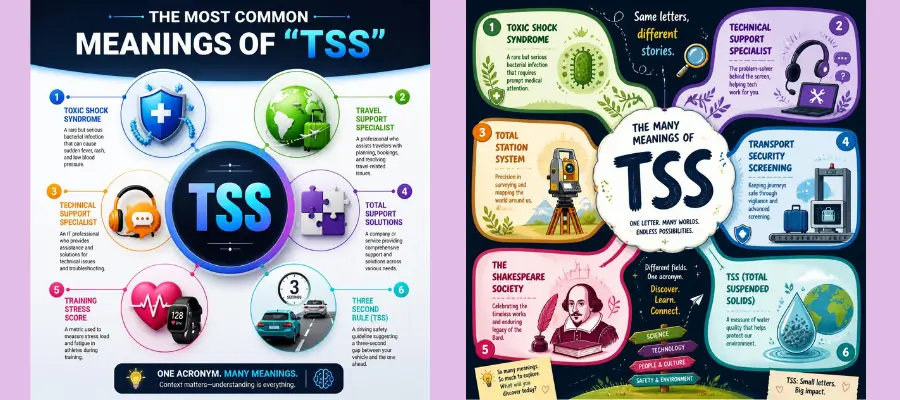
| Toxic Shock Syndrome | Medical/health articles | Not slang — a real medical condition |
| Time-Sharing System | Tech/computer science contexts | Not slang — old computing term |
If you’re reading this because someone just texted you “TSS,” it’s almost certainly one of the first three. The trick is context.
Where “TSS” Actually Comes From
Unlike acronyms with a clean origin story (like “LOL” or “BRB”), TSS grew out of texting shorthand for the sound people make when they click their tongue disapprovingly: “tsk, tsk.” Typing out “tsk tsk” is clunky on a phone keyboard, so it got compressed into three fast letters: TSS.
From there, it spread the way most internet slang does through comment sections, group chats, and short-form video culture and picked up new interpretations along the way. Some communities leaned into the original teasing/disapproving tone.
Others reused the same three letters to mean something completely different, like “That’s So Sweet”, simply because it was quick to type. Both usages now coexist, which is exactly why searches for “TSS meaning” turn up conflicting answers
The Most Common Meanings of “TSS”
TSS = A Reaction Sound (“Impressed” or “Damn”)
This is by far the most common use today.
People type “tss” the same way they’d say it out loud a quick, sharp sound reacting to something bold, attractive, or surprising.
Examples:
This version shows up constantly on:
- TikTok comments
- Instagram captions
- Snapchat stories
- Reaction posts
It’s almost always written lowercase and short, mimicking a real sound rather than spelling out a full sentence.
TSS = Playful Teasing or Shade
Sometimes TSS carries a lighthearted, teasing energy instead of pure praise.
Examples:
Here, TSS pokes fun at someone without being genuinely mean. It’s closer to a smirk than an insult.
TSS = Secondhand Embarrassment
TSS can also express cringe reactions to something awkward happening to someone else.
Examples:
This use leans more sympathetic than mocking, though tone can shift it either way.
TSS = Mild Disapproval
Less common, but TSS occasionally shows up as a soft “tsk” disapproval without full-on anger.
Examples:
This meaning is closer to the older, literal use of a tongue-click sound of disappointment.
How “TSS” Is Used in Real Conversations

Friends & Casual Texting
Among friends, TSS is almost always reaction-based hyping someone up or reacting to a bold statement.
Examples:
It’s fast, casual, and doesn’t need explanation between people who already text like this.
TikTok & Instagram
On TikTok and Instagram, TSS shows up heavily in comment sections reacting to outfits, glow-ups, dance moves, or bold captions.
Examples:
Comment culture rewards short, punchy reactions, and TSS fits that perfectly.
Snapchat
On Snapchat, TSS often reacts to a photo, story, or selfie.
Examples:
It’s quick, low-effort, and matches the casual back-and-forth style of Snapchat conversations.
Dating Apps
On dating apps, TSS usually signals attraction or playful flirting.
Examples:
It can read as flattering or teasing depending on what came before it in the conversation.
Gaming & Online Communities
TSS shows up less in gaming chats specifically, but when it does, it’s usually reacting to an impressive or funny play.
Examples:
Work or Professional Chat
What is tss meaning in text?TSS should be avoided in professional settings. It reads as a sound effect, not a word, and can confuse coworkers or clients who aren’t familiar with internet slang.
Bad example:
Better example:
- “This report looks great; nice work.”
Is “TSS” Rude, Flirty, or Offensive?
TSS is not inherently rude. Like most sound-based slang, tone comes entirely from what surrounds it.
When TSS Feels Positive
Used with praise or hype, TSS feels warm and complimentary.
Examples:
When TSS Feels Rude
Paired with sarcasm or criticism, TSS can feel dismissive.
Examples:
When TSS Feels Flirty
In flirty exchanges, TSS often plays up attraction.
Examples:
When TSS Becomes Offensive
TSS itself isn’t offensive, but paired with mocking language, it can sting.
Example:
How to Respond When Someone Says “TSS”
Casual Replies
- “lol stop”
- “I know right”
- “Tss back at you”
- “Facts though”
Funny Replies
- “TSS says less.”
- “Okay, dramatic”
- “Tss, you’re not innocent either.”
Neutral Replies
- “Haha, what do you mean?”
- “explain 😂”
- “Okay??”
Professional Replies
If TSS somehow shows up in a work chat:
- “Could you clarify what you mean?”
- “Not sure I follow. Can you explain?”
Common Misunderstandings About “TSS”
Thinking It’s an Abbreviation
Many people assume TSS stands for specific words. Most of the time, it doesn’t; it’s meant to represent a sound, not spell out a phrase.
Confusing It With “TS”
TS and TSS look similar but function differently. TS usually replaces “this” or “this stuff,” while TSS mimics a hissing or teeth-sucking reaction sound.
Misreading Tone
Because TSS has no built-in emotion, the same message can read as playful to one person and rude to another.
Assuming It’s New
The sound itself is old; people have made this noise for reactions for years. What’s new is typing it out as slang across social platforms.
Similar Slang Terms You Should Know
FR
Means “for real.” Example: “Tss, she’s fr the best dressed.”
NGL
Means “not gonna lie.” Example: “NGL, TSS was well deserved.”
LOWKEY
Means slightly or secretly. Example: “lowkey tss underrated.”
HIGHKEY
Means openly or strongly. Example: “Highkey TSS iconic.”
SMH
Means “shaking my head.” Example: “Smh, TSS, unbelievable.”
BET
Means “okay” or “agreed.” Example: “Bet, TSS noted.”
IMO
Means “in my opinion.” Example: “imo Tss overrated.”
When You Should Avoid Using “TSS”
Professional Settings
Skip TSS in emails, meetings, client chats, and school assignments; it doesn’t translate well outside casual slang.
Cross-Cultural Conversations
Not everyone reads a hissing or teeth-sucking sound the same way. Spelling things out avoids confusion with international contacts.
Sensitive Situations
During arguments, emotional talks, or serious news, sound-based slang like TSS can come across as careless or dismissive.
Talking With Older People
Many older users won’t recognize TSS at all, so full words communicate more clearly.
Academic or Formal Writing
Avoid TSS in essays, reports, and applications; it undermines a formal tone instantly.
How to Tell Which Meaning Someone Means
Since TSS carries real ambiguity, use these context clues before you reply:
- Check the emoji. A 🙄 or 😂 next to TSS signals teasing or sarcasm. A ❤️ or 🥺 signals the “sweet” meaning.
- Look at what came before it. Was the previous message something kind or something a little embarrassing? TSS usually reacts to the tone that’s already in the chat.
- Consider your relationship with the sender. Close friends and gaming groups lean toward the teasing meaning far more often than romantic partners or family members do.
- Read the platform’s culture. TikTok and Snapchat skew playful/sarcastic; Instagram DMs and WhatsApp skew affectionate.
When genuinely unsure, it’s completely normal to just ask, “Wait, TSS, as in…?” People won’t think it’s a strange question; the term is ambiguous enough that even frequent users double-check sometimes.
TSS Outside of Texting
Two important non-slang meanings are worth knowing so you don’t mix them up:
- Toxic Shock Syndrome (TSS): A rare but serious medical condition linked to bacterial infection, sometimes associated with prolonged tampon use or wound infections. If you see TSS in a health article, news piece, or medical context, this is almost certainly what’s meant, not the texting slang.
- Time-Sharing System (TSS): An older computing term referring to systems that let multiple users share processing time on one computer. You’ll only encounter this in tech or computer science writing.
Context makes the difference obvious almost immediately; nobody’s going to confuse a Snapchat reply with a medical journal.
Quick Examples
Frequently Asked Questions
Does TSS always mean “That’s So Sweet”?
No. That’s one common meaning, but on platforms like Snapchat and TikTok, TSS more often functions as a teasing “tsk tsk” reaction. Check the context and emojis before assuming.
Is TSS an insult?
Generally not. It’s usually light-hearted teasing between people who already have a friendly relationship, not a genuine insult.
Is TSS still used in 2026?
Yes, it remains active in Snapchat replies, TikTok comments, and gaming chats, though like most slang, its popularity varies by community and age group.
Can TSS be used sarcastically?
Yes. Especially on TikTok and in gaming chats, TSS often carries a dry, sarcastic tone rather than a purely affectionate one.
Is it okay to use TSS in professional messages?
No, it’s informal slang and doesn’t belong in work emails, reports, or client communication.
The Bottom Line
TSS meaning in text is one of those rare slang terms that genuinely mean different things to different people, and no single definition is “correct” everywhere. The safest approach: read the emoji, read the tone of the conversation, and read the platform. Once you’ve got those three, decoding TSS takes about two seconds; no more guessing required.