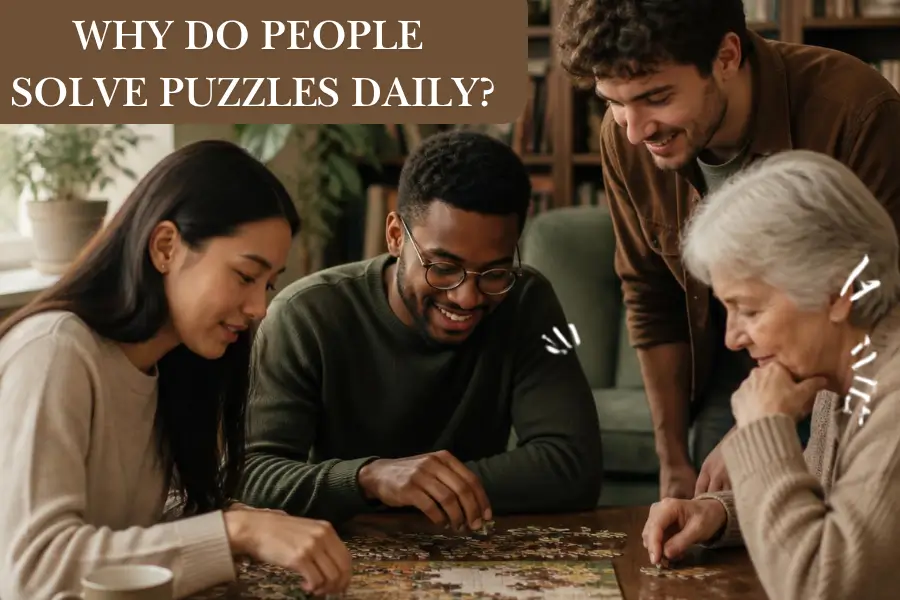
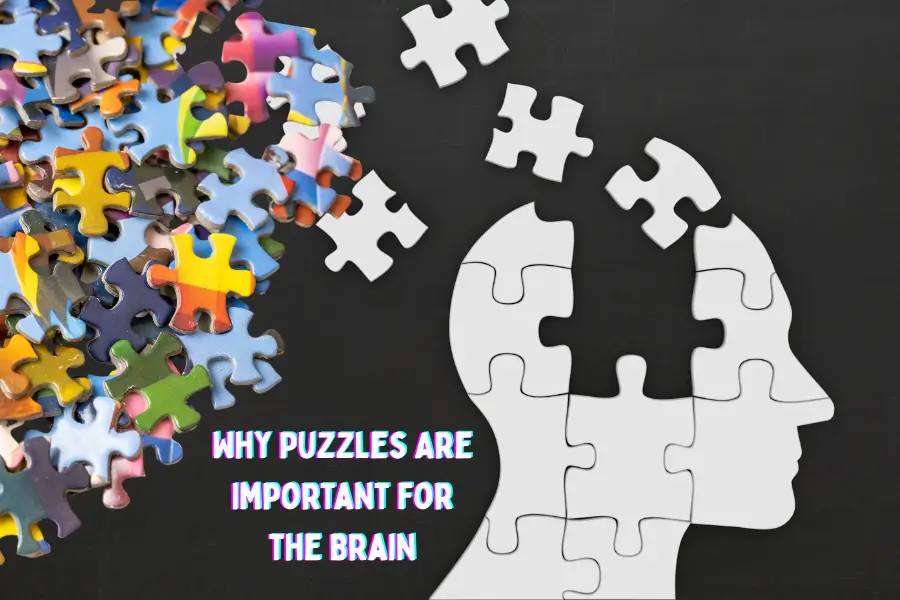
Are puzzles good for anxiety?Puzzles may help some people feel calmer by giving the mind a focused, low-pressure task to work on. Solving a jigsaw, crossword, or Sudoku puzzle can promote mindfulness, encourage a sense of accomplishment, and offer a break from screens and everyday stress.
However, puzzles are not a treatment or cure for anxiety disorders they work best as one part of a broader self-care routine that may also include exercise, good sleep habits, and support from a mental health professional when anxiety is severe or persistent.
Anxiety often shows up as racing thoughts, a restless mind, and difficulty focusing on anything other than what’s worrying you. That’s exactly why puzzles have become such a popular coping tool. Whether it’s a jigsaw puzzle spread across the kitchen table or a crossword during a coffee break, the focused attention these activities require can interrupt anxious thought patterns and create a small pocket of calm in a busy day.
In this article, we’ll walk through the science-backed reasons puzzles may help with anxiety, which types of puzzles tend to work best, when puzzles might backfire, and how to build them into a healthy relaxation routine without overstating what they can do.
Are Puzzles Good for Anxiety?
For many people, yes puzzles can be a genuinely helpful tool for managing everyday stress and anxious feelings. They’re not a cure, but they check a lot of boxes that mental health experts associate with relaxation and stress relief.

Here’s why puzzle activities may feel calming:
- Focus and distraction from stressful thoughts. A puzzle gives your brain something specific to concentrate on, which can pull attention away from whatever is causing worry.
- Relaxation. The repetitive, low-stakes nature of fitting pieces together or filling in a grid can have a soothing, almost rhythmic quality.
- A sense of accomplishment. Finishing a puzzle, even a small one, gives your brain a little win — something that can feel especially valuable on an anxious day.
- Mindful attention. Puzzles require you to notice small details in the present moment, which is a core principle of mindfulness practice.
- Enjoyable mental stimulation. Unlike scrolling on a phone, puzzles engage active problem-solving, which many people find more satisfying and less draining.
- Taking a break from screens or stressful activities. Stepping away from email, news, or social media — even for 20 minutes — can lower mental fatigue and give your nervous system a chance to reset.
None of this means puzzles work the same way for everyone. Some people find puzzles deeply relaxing; others find them tedious or frustrating. Individual experience varies, and that’s worth keeping in mind throughout this article.
How Can Puzzles Help With Anxiety?
Anxiety tends to feed on an overactive mind racing thoughts, worst-case scenarios, and a lack of focus on anything grounding. Puzzles work against that pattern in a few specific ways.
They Encourage Focus
When you’re piecing together a jigsaw puzzle, working through a logic puzzle, or hunting for the next word in a word search, your brain has to concentrate on shapes, patterns, letters, or clues. That kind of concentration doesn’t leave much room for anxious thoughts to run in the background. Many people describe entering a “flow state” a mental zone where you’re absorbed enough in the task that outside worries temporarily fade.
They Provide a Sense of Control
Anxiety often comes with a feeling that things are unpredictable or out of your hands. Puzzles are the opposite: they’re solvable, contained, and predictable. Every piece you place or clue you solve is a small, controllable step toward a clear goal. That structure and steady sense of progress can be genuinely reassuring when everything else feels uncertain.
They Can Encourage Mindful Thinking
Mindfulness is the practice of paying attention to the present moment without judgment. Puzzles naturally encourage this because they demand attention to detail the color of a puzzle piece, the shape of a letter, the logic of a number grid. Staying focused on what’s directly in front of you can help quiet racing thoughts and pull your mind out of past regrets or future worries.
They Create Small Achievements
Completing a puzzle, or even solving one tricky section, gives your brain a small reward. This sense of accomplishment can boost mood and confidence both of which tend to take a hit during periods of high anxiety. Even a five-minute win, like solving a tough crossword clue, can shift your outlook for the rest of the day.
They Can Be Relaxing
Quiet, low-pressure activities give the nervous system a chance to settle. Puzzles are typically solitary or gently social, don’t require quick decisions under pressure, and can be done at your own pace. That combination — engaging but not stressful is part of what makes puzzling such an effective wind-down activity for many people.
What Types of Puzzles Are Best for Anxiety?
There’s no single “best” puzzle for anxiety — the right choice depends on your interests, your current stress level, and how much mental effort you want to put in. Here are some popular options:

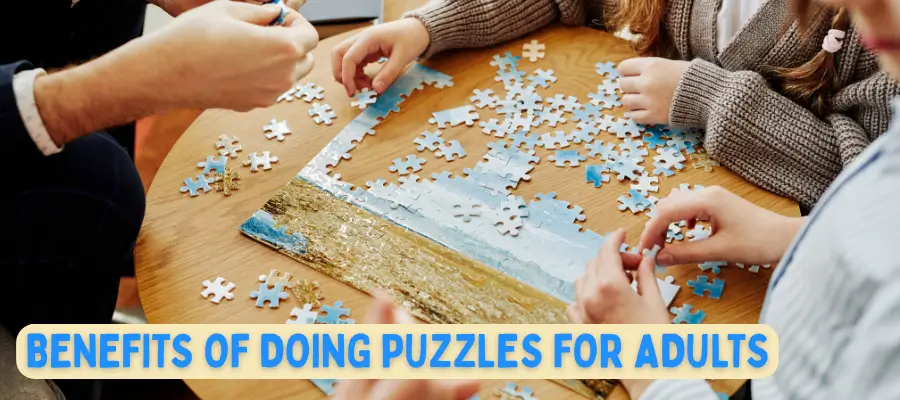
- Jigsaw puzzles – A classic choice for relaxation. The repetitive motion of sorting and fitting pieces is calming, and there’s no time pressure.
- Crossword puzzles – Great for people who enjoy language and want a bit of gentle mental exercise along with relaxation.
- Word searches – Simple and low-pressure, ideal for when you want distraction without much cognitive load.
- Sudoku – A good fit for people who like numbers and logical patterns; the difficulty can be adjusted easily.
- Logic puzzles – These offer more of a mental challenge and can be satisfying for people who enjoy structured problem-solving.
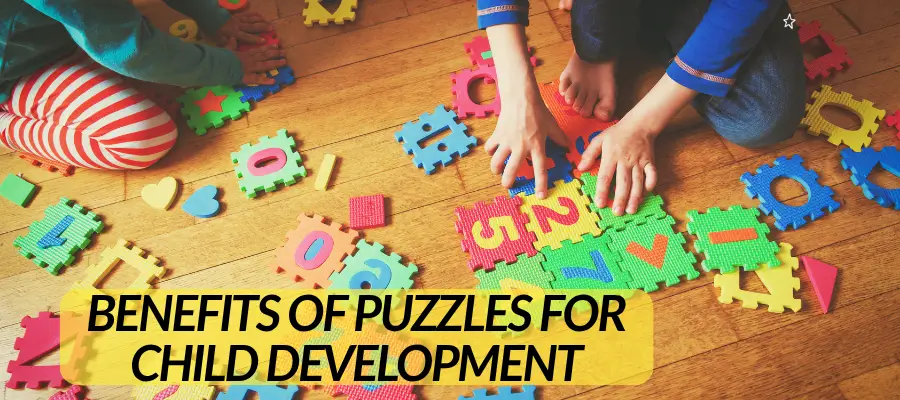
- Matching puzzles – Simple and visual, often a good starting point for children or for anyone easing into puzzle activities.
- Easy brain teasers – Short, low-commitment puzzles that fit into small breaks throughout the day.
- Coloring and puzzle activities – Adult coloring books are often grouped with puzzles as calming, screen-free activities that support focus and relaxation.
If you’re feeling especially anxious, it often helps to start with something easy and familiar rather than a brand-new, high-difficulty puzzle. The goal is calm engagement, not frustration.
Can Puzzles Make Anxiety Worse or are puzzles good for anxiety?
It’s a fair question, and the honest answer is: sometimes, yes. Puzzles are generally low-risk, but they can backfire under certain conditions.
You may experience more stress from a puzzle if:
- The puzzle is too difficult and leaves you feeling stuck or incapable.
- You feel pressured to finish quickly, turning a relaxing activity into a race against the clock.
- You become overly competitive, especially with puzzle apps that track scores or timers.
- You repeatedly fail to solve it, which can chip away at confidence rather than build it up.
- You use puzzles as your only coping strategy, relying on them to avoid dealing with the actual source of anxiety.
Practical tips for choosing an enjoyable difficulty level:
- Pick a puzzle that’s challenging enough to hold your interest but not so hard that it feels impossible.
- Turn off timers or competitive features if they add pressure.
- Give yourself permission to look up an answer or take a break instead of forcing a solution.
- Choose puzzle types you already enjoy rather than ones you feel like you “should” be good at.
- Treat puzzles as one relaxing option among several — not a requirement.
Puzzles for Adults vs. Children With Anxiety
Puzzle activities can be adapted for nearly any age, but the type of puzzle and the expected benefit shift depending on developmental stage.
| Age Group | Suitable Puzzle Types | Potential Benefit |
|---|---|---|
| Young children | Matching and simple picture puzzles | Focus and engagement |
| School-age children | Word, number, and logic puzzles | Problem-solving and concentration |
| Teens | Sudoku, logic puzzles, crosswords | Mental focus and relaxation |
| Adults | Jigsaw, crossword, Sudoku, logic puzzles | Relaxation and mindful engagement |
It’s worth being careful with the framing here: puzzles can support focus, engagement, and a sense of calm across age groups, but they should not be presented as a way to diagnose, prevent, or cure anxiety in children or adults. If a child or teen shows ongoing signs of anxiety, it’s best to involve a parent, school counselor, or pediatric mental health professional rather than relying on puzzle activities alone.
How to Use Puzzles as a Relaxing Activity
If you want to try puzzles as part of your stress-relief routine, a few simple habits can make the experience more effective:
- Choose a comfortable difficulty level. Pick something that engages you without becoming a source of frustration.
- Set aside quiet time. Even 15–20 minutes in a calm space can make a noticeable difference.
- Avoid rushing. Puzzles work best as a relaxation tool when there’s no deadline attached.
- Choose puzzles you genuinely enjoy. Motivation matters — a puzzle type you find boring won’t offer much calming benefit.
- Take breaks when needed. Stepping away and coming back later is completely fine.
- Stop if the activity becomes frustrating. If a puzzle starts raising your stress instead of lowering it, that’s a sign to put it down.
- Combine puzzle activities with other healthy coping strategies, such as deep breathing, light exercise, journaling, or talking with a friend.
Are Puzzles a Treatment for Anxiety?
No puzzles are a relaxing recreational activity, not a clinical treatment for anxiety disorders. There’s an important difference between something that can help you feel calmer in the moment and something that’s been clinically studied and proven to treat a diagnosed condition.
Puzzles may be a useful, low-cost addition to your self-care toolkit. They can support mindfulness, provide a mental break, and offer a sense of accomplishment. But for persistent, severe, or interfering anxiety the kind that affects sleep, relationships, or daily functioning the appropriate next step is speaking with a doctor, therapist, or other qualified healthcare professional. Puzzles can complement professional care; they shouldn’t replace it.
Benefits of Puzzles for Mental Health
Beyond anxiety specifically, puzzles are associated with a range of general mental well-being benefits, including:
- Focus — training your brain to concentrate on one task at a time
- Engagement — offering an absorbing, screen-free activity
- Enjoyment — providing a genuinely fun way to spend downtime
- Mental stimulation — keeping the brain active through problem-solving
- Patience — encouraging a slower, more deliberate pace
- Problem-solving — building and maintaining cognitive skills
- Sense of achievement — reinforcing confidence through small wins
- Taking intentional breaks — creating built-in pauses from stress or screen time
It’s worth being clear: these are general well-being benefits, not clinically proven anxiety treatments. Puzzles support the kind of mental habits — focus, patience, mindful attention — that tend to correlate with lower stress, but they work differently for everyone, and they aren’t a substitute for professional mental health care when it’s needed.
Frequently Asked Questions
Are puzzles good for anxiety?
Puzzles may help many people feel calmer by encouraging focus, mindfulness, and a sense of accomplishment. They aren’t a cure, but they can be a helpful relaxation tool.
Can puzzles calm anxiety?
For some people, yes. The focused attention puzzles require can interrupt anxious thought patterns and create a calming, meditative-like state.
Do puzzles help with stress?
Puzzles can help reduce everyday stress by offering a distraction from stressful thoughts and a low-pressure, enjoyable task to focus on.
What is the best puzzle for anxiety?
There’s no single best option jigsaw puzzles, crosswords, word searches, and Sudoku are all popular choices. The best puzzle is one you genuinely enjoy and can complete without frustration.
Can jigsaw puzzles reduce anxiety?
Jigsaw puzzles are often described as especially relaxing because of their repetitive, low-pressure nature. Many people find them calming, though results vary from person to person.
Are puzzles good for mental health?
Puzzles can support general mental healthby encouraging focus, patience, problem-solving, and a sense of accomplishment all of which may contribute to a calmer mindset.
Can puzzles distract you from anxious thoughts?
Yes, this is one of the main ways puzzles may help. Concentrating on a puzzle gives your brain a specific task, which can temporarily shift attention away from worry.
Can puzzles make anxiety worse?
In some cases, yes if a puzzle is too difficult, feels like a competition, or is used as the only coping strategy, it can add stress rather than relieve it.
How long should you do puzzles for relaxation?
There’s no fixed rule, but many people find 15–30 minutes of relaxed, unhurried puzzling to be a helpful break without becoming a chore.
Can puzzles replace anxiety treatment?
No. Puzzles can be a useful relaxation activity, but they are not a substitute for professional support when anxiety is severe, persistent, or affecting daily life.
Final Takeaway
Are puzzles good for anxiety?Puzzles aren’t a medical treatment, but for many people, they’re a genuinely helpful way to unwind. Activities like jigsaw puzzles, crosswords, and Sudoku encourage focus, mindful attention, and a real sense of accomplishment all of which can support a calmer mind.
The key is choosing puzzles you enjoy, keeping the difficulty level comfortable, and treating puzzling as one piece of a broader self-care routine. If anxiety feels persistent or overwhelming, puzzles can be a helpful complement to professional support, but they shouldn’t be the only strategy you rely on.