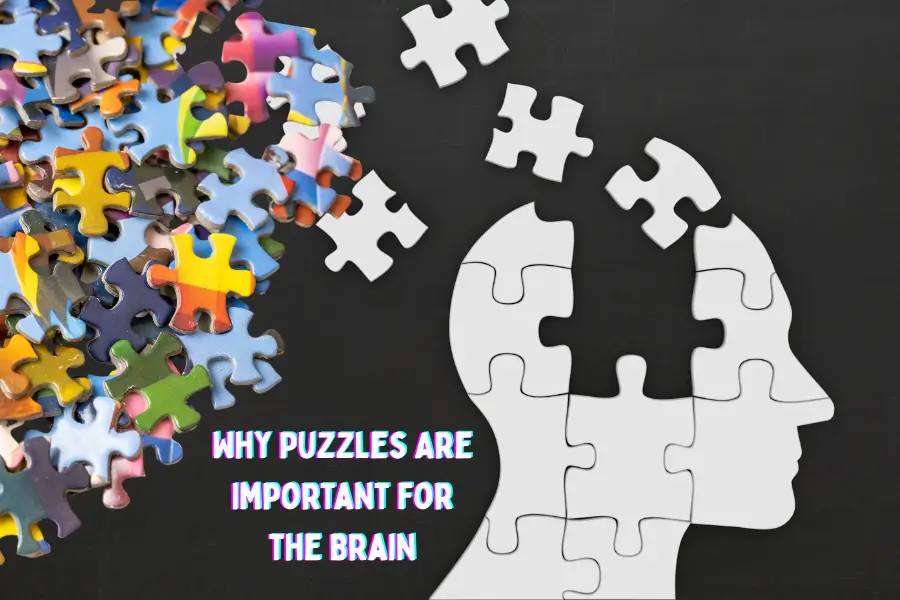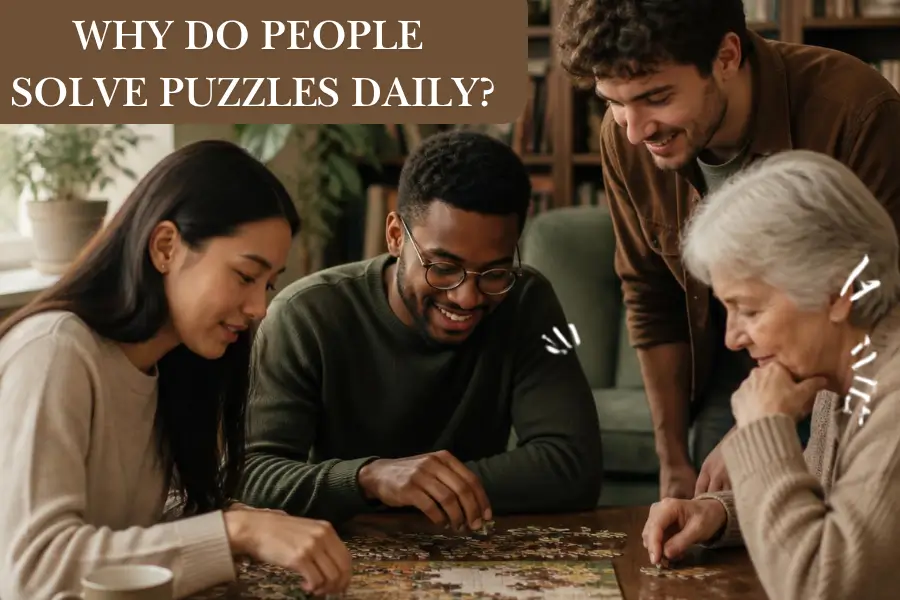
Why do people solve puzzles daily? Most of the time, it comes down to a mix of curiosity, routine, relaxation, and the simple satisfaction of finishing something. A puzzle gives you a clear problem and a clear solution, which is rare in everyday life.
That clarity, combined with the small thrill of figuring something out, is enough to turn a five-minute crossword or a quick Sudoku grid into a habit that sticks for years. Some people solve puzzles because they enjoy the mental workout.
Others do it because it fills a quiet moment on a commute or gives their mind something to focus on before bed. A few just like winning against the puzzle itself, even if nobody else ever sees the result. There is no single reason, and that is part of what makes daily puzzle solving such an interesting habit to look at.
This article walks through the psychological, cognitive, emotional, social, and entertainment reasons behind the daily puzzle habit, without overselling what puzzles can and cannot do for you.
Why Do People Solve Puzzles Daily?
People solve puzzles daily because puzzles offer mental stimulation, a sense of achievement, and a break from routine, all wrapped into a short, low-pressure activity. Curiosity pulls people toward an unanswered question, problem-solving keeps them engaged, and the moment of completion delivers a quick sense of satisfaction.
For many, it becomes a comfortable part of the day, similar to a morning coffee or an evening walk.
Some of the most common reasons include:
- Mental stimulation and a chance to think differently for a few minutes
- Curiosity about the answer or the pattern hiding inside the puzzle
- A structured form of problem-solving with a clear goal
- The comfort of routine, especially at a consistent time of day
- Entertainment that does not require much setup
- Relaxation and a break from other responsibilities
- A sense of achievement once the puzzle is solved
- Personal challenge, especially when the difficulty increases over time
- Opportunities for learning new words, patterns, or strategies
- Social interaction when puzzles are shared with others
Each of these reasons deserves a closer look, because they rarely operate alone. A single crossword might scratch a curiosity itch, offer a moment of calm, and end with a small hit of pride, all at once.
Puzzles Give People a Daily Mental Challenge
A puzzle is one of the few activities that hands you a clear goal right away. You know what you are trying to do, whether that is filling in a grid, finding a hidden word, or working out a riddle. That clarity is refreshing, because most problems in daily life are messier and harder to define.
Solving a puzzle calls on a specific kind of thinking. You have to pay attention to details, hold a few possibilities in your head at once, and test ideas until something clicks. This requires concentration, and that concentration is part of the appeal. For a few minutes, your mind has one job instead of ten.
It is worth being honest here. Not every puzzle sharpens every mental skill, and a quick word search is not going to transform how someone thinks. What a daily puzzle does offer is a small, repeatable moment of focused reasoning, and for a lot of people, that is enough of a reason to come back to it.
Must Read : 10 Surprising Benefits of Puzzles for Child Development
Solving Puzzles Can Become a Habit
Puzzle solving fits naturally into a daily routine because it is short, self-contained, and does not require much preparation. Some people do a puzzle with their morning coffee. Others save it for a lunch break, a commute, or the last few minutes before falling asleep. The exact time matters less than the fact that it is predictable.
Predictability is comforting. When a puzzle becomes part of a routine, it gives the day a small, familiar checkpoint. There is something satisfying about knowing you will sit down with the same type of challenge at roughly the same time, almost like a mental stretch before or after the rest of the day happens.
There is a real difference, though, between a healthy recreational habit and a habit that starts to feel like an obligation. A daily crossword that someone genuinely looks forward to is a healthy habit. A puzzle that someone feels they must finish, even when they are tired or stressed, has crossed into something less enjoyable. The goal of a daily puzzle habit should be enjoyment first. If it stops being fun, it is worth stepping back and asking why.
Curiosity Keeps People Coming Back
Curiosity is one of the strongest forces behind puzzle solving. An unanswered question creates a kind of itch, and the brain does not love leaving that itch unscratched. A half-finished crossword, a riddle with one missing piece, or a logic puzzle that is almost solved can be surprisingly hard to walk away from.
This is especially true when a puzzle offers hidden clues or a sense of mystery. Every clue solved narrows the possibilities and makes the final answer feel closer, which pulls attention back in even when someone meant to stop. That mix of uncertainty and discovery is part of what makes puzzles so engaging in the first place.
Anyone who has left a crossword unfinished overnight knows the feeling of thinking about it randomly the next morning. That lingering curiosity is not a flaw. It is a normal response to an open question, and it is one of the main reasons people return to puzzles again and again.
Also Read : Are Puzzles Good for Anxiety? Benefits, Tips & What to Know
People Enjoy the Satisfaction of Solving Something
There is a specific kind of satisfaction that comes from finally solving a puzzle that has been resisting you. Whether it is a single word that unlocks the rest of a crossword or a number that suddenly makes an entire Sudoku grid make sense, that moment of insight feels good.
This is sometimes called an “aha” moment, and it tends to arrive suddenly. One second the puzzle feels stuck, and the next second the answer is obvious. That contrast between confusion and clarity is part of what makes the moment memorable.
Completion matters here too. Puzzles give people a defined finish line, something many daily tasks do not offer. Finishing a puzzle, even a small one, provides a real sense of achievement and closure. It is a manageable form of success that does not require days of effort, just persistence for a few minutes or a few hours.
None of this requires exaggerated claims about brain chemistry to make sense. People simply enjoy solving problems, and puzzles are designed to deliver that experience in a compact, repeatable way.
Daily Puzzles Can Provide a Break From Routine
Even though puzzle solving often becomes routine itself, it also works as a break from everything else going on in someone’s day. A short puzzle during a lunch break shifts attention away from work. A quick word puzzle during a commute gives the mind something better to do than replay the day’s stress.
People use puzzles in a lot of different moments:
- Morning routines, as a gentle way to wake the mind up
- Lunch breaks, as a mental reset between tasks
- Commutes, especially on trains or as a passenger
- Quiet evenings, as a wind-down activity
- Study breaks, to give the brain a short change of pace
- Any pocket of free time that would otherwise go to scrolling a phone
The appeal is that a puzzle gives attention something specific and contained to focus on. Instead of a wandering mind jumping between worries, a puzzle offers one narrow task. For many people, that narrow focus is exactly what makes it feel like a break.
Puzzles Can Be Relaxing
Relaxation looks different for everyone, and puzzles fit that description differently depending on the person. For some, the repetitive, focused nature of filling in a crossword or working through a number puzzle is genuinely calming. The activity requires just enough attention to crowd out other thoughts, without demanding so much effort that it becomes stressful.
This kind of calm often comes from a few things working together:
- Focus that narrows attention to one task
- A temporary distraction from everyday concerns
- A bit of quiet, personal time
- Concentration that feels enjoyable rather than forced
It is important to be clear that puzzles are not a treatment for anxiety, depression, or any other medical condition. They are a recreational activity that some people find calming, in the same way others find gardening or cooking calming. Relaxation from puzzle solving is real for many people, but it is personal, not universal, and it should not be mistaken for therapy.
People Like Tracking Their Progress
Progress is motivating, and a lot of daily puzzle habits are built around some form of tracking. Solving streaks, personal best times, and increasing difficulty levels all give people a reason to keep showing up. Comparing today’s performance with yesterday’s, even informally, adds a layer of personal challenge to something that might otherwise feel repetitive.
This shows up in small ways. Someone might notice they solved a puzzle faster than usual or that they finally beat a level that stumped them the day before. Learning from a wrong guess and adjusting on the next attempt is part of the appeal too. Mistakes are not really failures in a puzzle, they are just information for the next try.
That said, streaks and personal records can tip into something unhealthy if someone starts to feel anxious about missing a day. The goal of tracking progress should be motivation, not pressure. A broken streak should not ruin someone’s day. It is just a puzzle, and there is always another one tomorrow.
Different Puzzles Challenge Different Skills
“Puzzle” is a broad word, and it covers a lot of very different activities. A riddle asks you to interpret language carefully. A logic puzzle asks you to reason through a set of rules. A crossword tests vocabulary and general knowledge. Sudoku relies on number placement and pattern recognition. A jigsaw puzzle depends heavily on spatial thinking and visual matching.
Some common types include:
- Riddles, which rely on wordplay and interpretation
- Logic puzzles, which test structured reasoning
- Crosswords, which draw on vocabulary and general knowledge
- Sudoku, which uses number placement and pattern recognition
- Word searches, which rely on visual scanning
- Number puzzles, which involve calculation and logic
- Pattern puzzles, which test the ability to spot sequences
- Visual puzzles, which lean on spatial reasoning
- Trivia puzzles, which draw on memory and general knowledge
- Jigsaw puzzles, which combine patience with spatial thinking
Because these puzzle types ask for different approaches, people often gravitate toward the ones that match their natural strengths or the ones that challenge a weaker area on purpose. It is worth being cautious about broad claims here.
Getting better at Sudoku will not automatically make someone better at crossword clues, since the two activities exercise fairly different skills. Variety is part of what keeps daily puzzle solving interesting over the long run.
Why Do People Enjoy Difficult Puzzles?
Difficulty plays a big role in how satisfying a puzzle feels. A puzzle that is too easy gets solved without much thought and is quickly forgotten. A puzzle that is too hard or feels impossible tends to cause frustration and gets abandoned.
Somewhere between those two extremes is a sweet spot, where the puzzle is challenging enough to require real effort but still solvable with persistence.
That balance between challenge and skill is what keeps a puzzle interesting. When someone is working right at the edge of what they can do, every small step forward feels earned. This is part of why difficult puzzles, once solved, tend to feel more rewarding than easy ones. The effort makes the payoff feel bigger.
Finding that right level of challenge is often personal. What feels satisfying to an experienced crossword solver might feel frustrating to a beginner, and what feels too simple to one person might be a genuine challenge to someone else. Part of enjoying puzzles daily is learning what level of difficulty actually works for you.
Puzzles Encourage Problem-Solving
At its core, solving a puzzle is an exercise in problem-solving. You have to identify the information in front of you, consider different possibilities, test out an idea, and adjust if it does not work. That process repeats until the puzzle is solved.
This process draws on several types of thinking working together:
- Logical reasoning, to work through cause and effect
- Critical thinking, to evaluate which options make sense
- Creative thinking, to consider less obvious solutions
- Pattern recognition, to notice repeating structures
- Observation, to catch small details that matter
- Decision-making, to commit to an answer and see if it holds up
Puzzles can provide practice in these areas, which is a more accurate way to describe the benefit than promising permanent improvement. A single crossword is not going to rewire how someone thinks for the rest of their life, but repeated practice with these mental processes, in a low-stakes and enjoyable format, is a reasonable way to keep them exercised.
Daily Puzzle Solving Can Be Social
Puzzles are often thought of as a solitary activity, but that is only part of the picture. A lot of daily puzzle solving happens with other people involved, whether directly or indirectly.
Some common examples include:
- Sharing a tricky riddle with a friend just to see if they can solve it
- Family puzzle nights built around a jigsaw or board-based challenge
- Classroom activities where a teacher uses a puzzle to spark discussion
- Online communities built entirely around a single daily puzzle
- Friendly competition over who solved something faster
- Comparing answers with a coworker over a shared crossword
- Talking through a tricky clue together instead of solving it alone
These social moments add another layer to the daily puzzle habit. Solving something together, or comparing notes afterward, creates a small shared experience. It turns a private mental challenge into a quick conversation starter, and for a lot of people, that social piece is just as enjoyable as the puzzle itself.
Why Do Adults Solve Puzzles Every Day?
Adults come to daily puzzles for a mix of practical and personal reasons. Entertainment is one of the simplest explanations. A puzzle is an easy way to fill a few spare minutes without needing a screen full of ads or a long commitment.
Beyond entertainment, adults often mention:
- Mental challenge, as a break from repetitive work tasks
- Nostalgia, especially for puzzles tied to childhood or family traditions
- Personal goals, like finishing a streak or beating a personal best
- Relaxation, as a way to unwind after a busy day
- Routine, since a daily puzzle offers structure and consistency
- Curiosity, especially with puzzles that change every day
- Social interaction, whether through family, friends, or online groups
None of these reasons require a scientific explanation to make sense. Adults solve puzzles daily largely for the same reasons they pick up other hobbies: because the activity is enjoyable, manageable, and fits into their life without much friction.
Why Do Older Adults Enjoy Daily Puzzles?
Puzzles are a popular daily activity among older adults, and it is easy to understand why. They offer an enjoyable mental activity that does not require much physical effort, and they often double as a social pastime, whether through a shared crossword at breakfast or a puzzle group at a community center.
Cognitive health is a complicated subject, and it depends on many factors, including genetics, overall health, sleep, physical activity, and social connection. Puzzle solving should not be presented as a guaranteed way to prevent dementia or slow cognitive decline.
Researchers are still studying how mentally engaging activities relate to long-term brain health, and the findings vary depending on the type of puzzle, the person, and how the research was designed.
What can be said with more confidence is that puzzles give older adults an enjoyable way to stay mentally engaged and socially connected, both of which are widely recognized as valuable parts of healthy aging. That is a meaningful benefit on its own, without needing to overstate what the science actually shows.
Why Do Kids Enjoy Solving Puzzles Daily?
Kids are drawn to puzzles for reasons that are a little different from adults, though there is plenty of overlap. Curiosity plays a big role, since children are naturally inclined to explore, ask questions, and figure out how things work. A puzzle taps directly into that instinct.
Games and a bit of friendly competition make puzzles fun for kids, especially when solving one means beating a sibling, a classmate, or even a personal best time. Puzzles also give children a chance to use their imagination, particularly with pattern-based or story-driven puzzles that ask them to think creatively.
There is a learning element too. Age-appropriate puzzles can introduce new vocabulary, numbers, shapes, or logical thinking in a way that feels like play rather than schoolwork. Parents and teachers often use puzzles for exactly this reason, since kids tend to stay more engaged with a challenge that feels fun instead of forced.
It is worth avoiding big developmental claims here. A puzzle is not going to fast-track a child’s intelligence, but it can be a genuinely enjoyable way to practice thinking skills while having fun, which is a good enough reason on its own.
Is Solving Puzzles Every Day Good for You?
The honest answer is that it depends, but there are real, modest benefits worth mentioning. Daily puzzles can provide opportunities to practice attention, reasoning, language, observation, problem-solving, and flexible thinking. These are useful mental skills, and regularly exercising them through an enjoyable activity is a reasonable thing to do.
At the same time, it is important to be clear about what the evidence does and does not support. Research on cognitive benefits varies quite a bit depending on the type of puzzle, the age of the person doing it, and how a particular study was designed. Daily puzzles do not automatically increase IQ, prevent dementia, cure mental health conditions, guarantee better memory, or make everyone smarter. Anyone claiming otherwise is overstating what current research actually shows.
A more accurate way to describe the benefits is that puzzles may help practice certain thinking skills, can provide an opportunity to stay mentally engaged, may support a sense of routine and relaxation, and can be an enjoyable way to exercise a particular skill, like vocabulary or spatial reasoning. That is a realistic picture, and it is still a genuinely good reason to keep a daily puzzle habit going.
What Happens When a Puzzle Becomes Too Difficult?
Not every puzzle session goes smoothly, and it is worth talking about what happens when a puzzle feels too hard. Excessive difficulty can lead to frustration, and frustration can quickly turn into a loss of interest or a decision to give up altogether. For some people, a puzzle that feels stuck for too long starts to feel like pressure instead of fun, especially if there is a personal streak or reputation on the line.
When that happens, a few practical steps tend to help:
- Take a short break and come back with fresh eyes.
- Try a different approach instead of repeating the same failed strategy.
- Look at the clues again, since something small is often missed the first time.
- Start with an easier puzzle to rebuild some momentum.
- Ask someone for a hint, especially if the puzzle is meant to be shared.
- Return to the puzzle later in the day instead of forcing it.
None of these steps are complicated, but they matter. A daily puzzle habit should stay enjoyable, and stepping away for a few minutes is often the difference between a puzzle that feels like a fun challenge and one that feels like a source of stress.
How to Make Daily Puzzle Solving More Enjoyable
A few small adjustments can make a big difference in how much someone enjoys their daily puzzle routine.
- Choose puzzles you actually enjoy, rather than ones you feel obligated to solve.
- Start with a manageable difficulty and build up from there.
- Try different puzzle types to keep things interesting.
- Do not worry about solving quickly. Speed is not the point.
- Learn from incorrect answers instead of getting frustrated by them.
- Take breaks when frustration starts to build.
- Solve with friends or family sometimes, just for the change of pace.
- Keep the activity fun rather than turning it into pressure or obligation.
These small changes keep the focus on enjoyment, which is really the whole point of a daily puzzle habit in the first place.
Frequently Asked Questions
Why do people solve puzzles daily?
People solve puzzles daily because puzzles offer a manageable mental challenge, a sense of curiosity, and a satisfying feeling of completion. For many, it also becomes a comforting part of their daily routine, offering relaxation, entertainment, and sometimes a chance to connect with others.
Is solving puzzles every day good for your brain?
Puzzles can provide an opportunity to practice attention, reasoning, and problem-solving skills. Research on long-term cognitive benefits varies depending on the puzzle type, the individual, and the study design, so it is more accurate to say puzzles may help support certain thinking skills rather than guarantee improvement.
Why do puzzles become a daily habit?
Puzzles are short, predictable, and require little setup, which makes them easy to fit into a daily routine. The combination of curiosity, a clear goal, and a quick sense of achievement encourages people to return to them regularly.
Why are people addicted to puzzles?
Most people are not clinically addicted to puzzles. What feels like addiction is usually strong enjoyment, driven by curiosity and the satisfaction of solving something. A genuine addiction involves compulsive behavior that interferes with daily life, which is different from simply enjoying a daily puzzle habit.
Do daily puzzles improve problem-solving?
Puzzles can provide practice in problem-solving, including logical reasoning, pattern recognition, and decision-making. This practice is useful, but it is more accurate to describe it as an opportunity to exercise these skills rather than a guaranteed improvement.
Why are difficult puzzles satisfying?
Difficult puzzles require more effort, which makes the eventual solution feel more rewarding. The balance between challenge and skill creates a sense of achievement that easier puzzles usually cannot match.
Final Thoughts
So, why do people solve puzzles daily? In the end, it usually has less to do with becoming smarter and more to do with enjoying the process itself. Curiosity pulls people in, a clear challenge keeps them engaged, and that small burst of satisfaction at the end keeps them coming back tomorrow.
A daily puzzle is not a magic fix for the brain, and it does not need to be. It is a short, enjoyable habit that offers focus, discovery, and a bit of accomplishment, all in the space of a few minutes. That combination, simple as it sounds, is exactly why so many people never quite give it up.