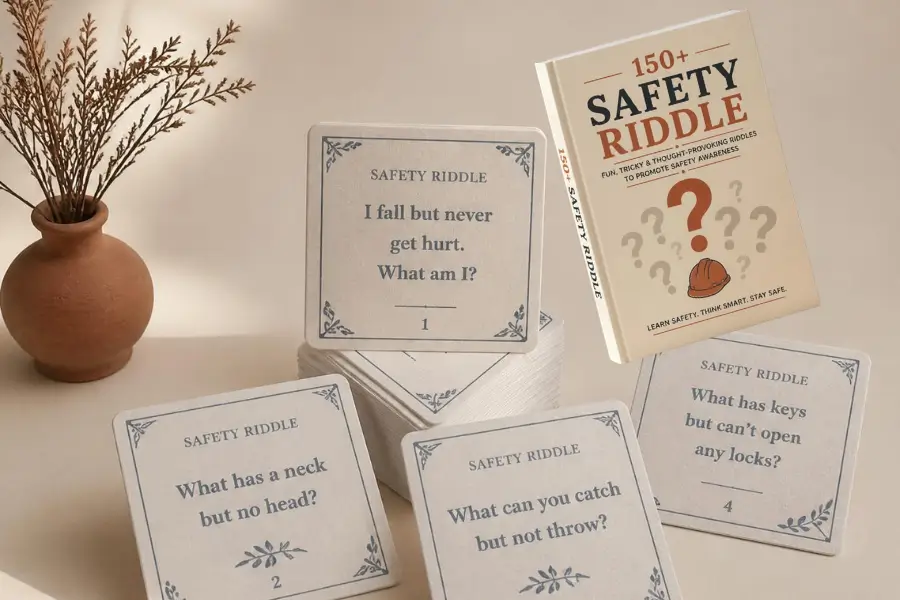
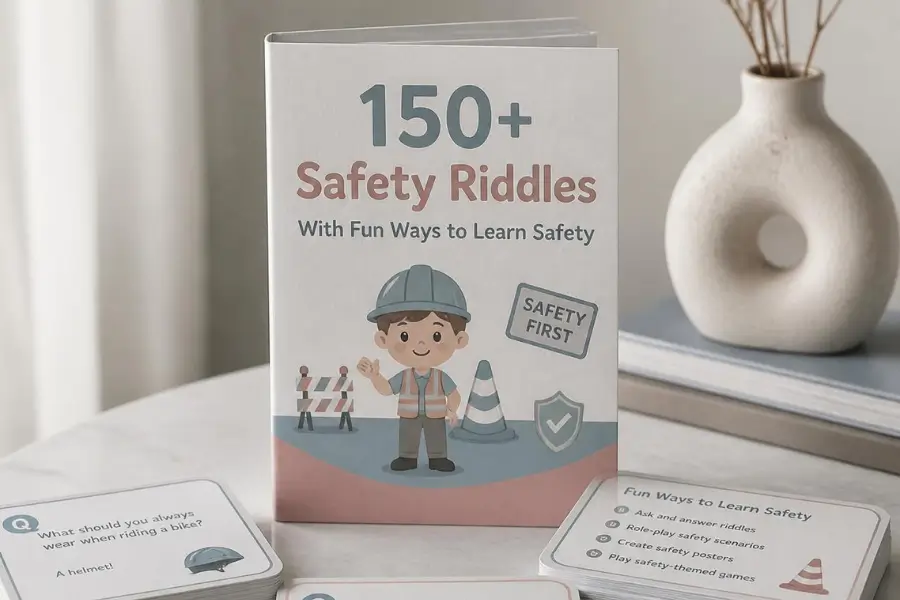
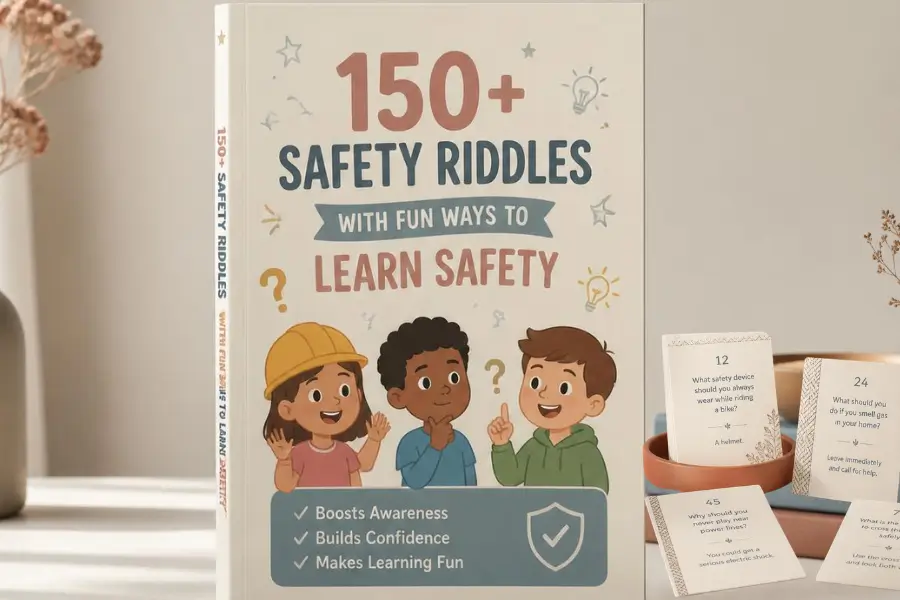
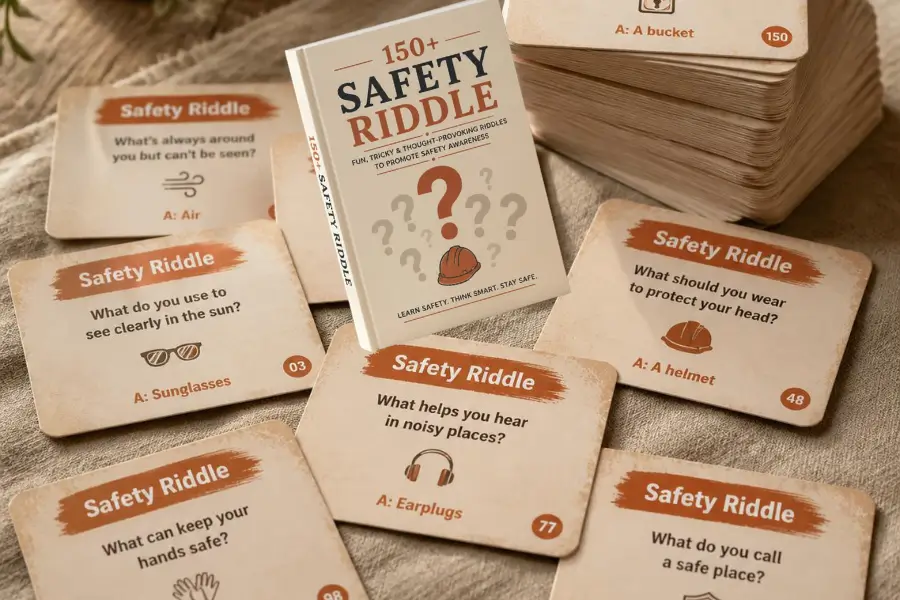
Safety is something we practice every day, whether we are at home, at work, on the road, or handling food. But learning safety rules does not always have to feel serious or boring. Safety riddles with answers can turn important safety lessons into a fun and memorable activity.
In this collection, you will find 160 original safety riddles covering different topics, including workplace safety riddles, road safety riddles, food safety riddles, fire safety riddles, health and safety riddles, and safety riddles for adults. Each riddle comes with an answer and a short explanation to make the clue easy to understand.
These safety-related riddles are useful for classrooms, workplaces, training sessions, safety games, quizzes, and group activities. You can also use them as ideas for a safety scavenger hunt or save them as a printable resource for future safety activities.
The goal is simple: have fun, think carefully, and learn useful safety habits along the way.
General Safety Riddles
These riddles introduce basic safety ideas that people can use in everyday life. They focus on recognizing hazards, following safety rules, staying alert, and making careful choices. They are suitable for kids, teens, and adults who want to learn important safety lessons in a fun way.
Against falling things, I help you prepare.
What am I?
EXPLANATION
FIRST CLUE: Sits upon your head
SECOND CLUE: Protects against falling objects
LOGICAL CONNECTION: A safety helmet protects the head from workplace hazards
CONCLUSION: Safety Helmet is correct.
From flying dust, I do not shirk.
What am I?
EXPLANATION
FIRST CLUE: Covers your eyes
SECOND CLUE: Helps block dust and flying particles
LOGICAL CONNECTION: Safety glasses protect the eyes during risky tasks
CONCLUSION: Safety Glasses is correct.
Warning you before trouble unfolds.
What am I?
EXPLANATION
FIRST CLUE: Stands near danger
SECOND CLUE: Gives a warning
LOGICAL CONNECTION: Warning signs alert people to possible hazards
CONCLUSION: Warning Sign is correct.
EXPLANATION
FIRST CLUE: Stands where water has spilled
SECOND CLUE: Warns people about slipping
LOGICAL CONNECTION: Wet floor signs alert people to slippery surfaces
CONCLUSION: Wet Floor Sign is correct.
I help workers stand out in light.
What am I?
EXPLANATION
FIRST CLUE: Bright and easy to notice
SECOND CLUE: Helps workers become visible
LOGICAL CONNECTION: High-visibility vests make workers easier to see
CONCLUSION: Safety Vest is correct.
Against rough work, I give direction.
What am I?
EXPLANATION
FIRST CLUE: Covers the hands
SECOND CLUE: Helps protect during certain tasks
LOGICAL CONNECTION: Safety gloves provide hand protection from workplace hazards
CONCLUSION: Safety Gloves is correct.
Around heavy objects, I never shirk.
What am I?
EXPLANATION
FIRST CLUE: Protects your toes
SECOND CLUE: Used around heavy objects
LOGICAL CONNECTION: Safety shoes can protect feet from workplace hazards
CONCLUSION: Safety Shoes is correct.
When you hear me, pay attention and hear.
What am I?
EXPLANATION
FIRST CLUE: Makes a loud sound
SECOND CLUE: Alerts people to danger
LOGICAL CONNECTION: Safety alarms warn people about emergencies
CONCLUSION: Safety Alarm is correct.
I point toward the place everyone goes.
What am I?
EXPLANATION
FIRST CLUE: Helps people leave a dangerous building
SECOND CLUE: Provides a route to safety
LOGICAL CONNECTION: Emergency exits provide a way out during emergencies
CONCLUSION: Emergency Exit is correct.
I wait quietly until help is found.
What am I?
EXPLANATION
FIRST CLUE: Contains medical supplies
SECOND CLUE: Helps with minor injuries
LOGICAL CONNECTION: First aid kits contain supplies for basic first aid
CONCLUSION: First Aid Kit is correct.
Use me carefully when fire is near.
What am I?
EXPLANATION
FIRST CLUE: Often red
SECOND CLUE: Used to fight certain small fires
LOGICAL CONNECTION: A fire extinguisher is designed for controlling appropriate small fires
CONCLUSION: Fire Extinguisher is correct.
I tell drivers when to stop or go.
What am I?
EXPLANATION
FIRST CLUE: Has three main colors
SECOND CLUE: Controls traffic movement
LOGICAL CONNECTION: Traffic lights guide drivers and pedestrians
CONCLUSION: Traffic Light is correct.
I give walkers a safer side.
What am I?
EXPLANATION
FIRST CLUE: Has stripes across the road
SECOND CLUE: Used by pedestrians
LOGICAL CONNECTION: Pedestrian crossings provide designated places to cross
CONCLUSION: Pedestrian Crossing is correct.
EXPLANATION
FIRST CLUE: Goes across the body
SECOND CLUE: Used inside vehicles
LOGICAL CONNECTION: Seat belts help restrain vehicle occupants during crashes
CONCLUSION: Seat Belt is correct.
I help reduce sound around your space.
What am I?
EXPLANATION
FIRST CLUE: Protects the ears
SECOND CLUE: Reduces exposure to loud noise
LOGICAL CONNECTION: Hearing protection helps reduce harmful noise exposure
CONCLUSION: Hearing Protection is correct.
Keeping people at a safer space.
What am I?
EXPLANATION
FIRST CLUE: Stands around a dangerous area
SECOND CLUE: Keeps people away from hazards
LOGICAL CONNECTION: Safety barriers help restrict access to unsafe areas
CONCLUSION: Safety Barrier is correct.
Use me carefully and take your time.
What am I?
EXPLANATION
FIRST CLUE: Has steps
SECOND CLUE: Helps people reach higher places
LOGICAL CONNECTION: A ladder provides access to elevated areas when used properly
CONCLUSION: Ladder is correct.
Push me in danger and I can intervene.
What am I?
EXPLANATION
FIRST CLUE: Is a small control
SECOND CLUE: Can stop machinery during an emergency
LOGICAL CONNECTION: Emergency stop buttons provide a quick way to stop equipment
CONCLUSION: Emergency Stop Button is correct.
I help find problems before trouble wins.
What am I?
EXPLANATION
FIRST CLUE: Happens before or during work
SECOND CLUE: Looks for hazards
LOGICAL CONNECTION: Safety inspections help identify unsafe conditions
CONCLUSION: Safety Inspection is correct.
I help you remember what to inspect.
What am I?
EXPLANATION
FIRST CLUE: Contains items to check
SECOND CLUE: Helps prevent missed safety steps
LOGICAL CONNECTION: A safety checklist organizes important safety checks
CONCLUSION: Safety Checklist is correct.
Workplace Safety Riddles
This section focuses on safety at work. These riddles cover common workplace hazards, protective equipment, tools, machines, warning signs, and safe working habits. They are useful for employees, workplaces, safety training activities, and anyone looking for safety riddles for the workplace.
I show that a hazard may be near.
What am I?
EXPLANATION
FIRST CLUE: Gives a warning without speaking
SECOND CLUE: Shows that danger may be nearby
LOGICAL CONNECTION: Warning signs help people recognize potential hazards
CONCLUSION: Warning Sign is correct.
I tell you not to enter when danger is near.
What am I?
EXPLANATION
FIRST CLUE: Stretches around an area
SECOND CLUE: Warns people to stay away
LOGICAL CONNECTION: Caution tape helps mark off areas that may be unsafe
CONCLUSION: Caution Tape is correct.
EXPLANATION
FIRST CLUE: Can be mounted on a wall
SECOND CLUE: Shows people where to leave
LOGICAL CONNECTION: Exit signs help people find an exit during an emergency
CONCLUSION: Exit Sign is correct.
I run beside stairs across the land.
What am I?
EXPLANATION
FIRST CLUE: Runs beside stairs
SECOND CLUE: Helps people keep their balance
LOGICAL CONNECTION: A handrail provides support while using stairs
CONCLUSION: Handrail is correct.
If I am damaged, give me space.
What am I?
EXPLANATION
FIRST CLUE: Carries electrical power
SECOND CLUE: Can become dangerous when damaged
LOGICAL CONNECTION: Damaged electrical cords should not be used
CONCLUSION: Electrical Cord is correct.
I protect circuits doing their parts.
What am I?
EXPLANATION
FIRST CLUE: Controls electrical power
SECOND CLUE: Can interrupt a circuit during a fault
LOGICAL CONNECTION: Circuit breakers help protect electrical systems from certain overloads and faults
CONCLUSION: Circuit Breaker is correct.
I help tell when food is safe to eat.
What am I?
EXPLANATION
FIRST CLUE: Measures temperature
SECOND CLUE: Used when preparing food
LOGICAL CONNECTION: A food thermometer helps check whether food has reached a safe temperature
CONCLUSION: Food Thermometer is correct.
I help keep meals fresh and right.
What am I?
EXPLANATION
FIRST CLUE: Keeps food cold
SECOND CLUE: Helps preserve perishable foods
LOGICAL CONNECTION: Refrigeration helps slow the growth of many harmful microorganisms
CONCLUSION: Refrigerator is correct.
Wash me away before food begins.
What am I?
EXPLANATION
FIRST CLUE: Can be found on unclean hands
SECOND CLUE: Can transfer to food
LOGICAL CONNECTION: Handwashing helps reduce the spread of germs during food preparation
CONCLUSION: Germs is correct.
EXPLANATION
FIRST CLUE: Keeps raw foods apart
SECOND CLUE: Protects ready-to-eat food
LOGICAL CONNECTION: Separating raw and ready-to-eat foods helps prevent cross-contamination
CONCLUSION: Food Separation is correct.
EXPLANATION
FIRST CLUE: Uses three main colors
SECOND CLUE: Controls traffic movement
LOGICAL CONNECTION: Traffic lights tell road users when to stop, wait, or proceed
CONCLUSION: Traffic Light is correct.
I help protect you wherever you are.
What am I?
EXPLANATION
FIRST CLUE: Goes across the body
SECOND CLUE: Used inside vehicles
LOGICAL CONNECTION: Seat belts help restrain vehicle occupants during crashes
CONCLUSION: Seat Belt is correct.
I give pedestrians a safer place to go.
What am I?
EXPLANATION
FIRST CLUE: Has painted stripes
SECOND CLUE: Used by pedestrians
LOGICAL CONNECTION: A crosswalk marks a designated place for pedestrians to cross
CONCLUSION: Crosswalk is correct.
Wear me properly and make safety last.
What am I?
EXPLANATION
FIRST CLUE: Protects the head
SECOND CLUE: Used during cycling
LOGICAL CONNECTION: Bicycle helmets are designed to help reduce head injury risk in certain crashes
CONCLUSION: Bicycle Helmet is correct.
A little water can make me dangerous to all.
What am I?
EXPLANATION
FIRST CLUE: Can be small and easy to miss
SECOND CLUE: Can make a surface slippery
LOGICAL CONNECTION: Spills should be cleaned or marked promptly to reduce slip hazards
CONCLUSION: Spill is correct.
I teach you what to do when trouble survives.
What am I?
EXPLANATION
FIRST CLUE: Happens before a real emergency
SECOND CLUE: Teaches people how to respond
LOGICAL CONNECTION: Emergency drills help people practice safe responses
CONCLUSION: Emergency Drill is correct.
But knowing me can help in a time of speed.
What am I?
EXPLANATION
FIRST CLUE: Prepared before an emergency
SECOND CLUE: Gives instructions during danger
LOGICAL CONNECTION: An emergency plan helps people know how to respond
CONCLUSION: Emergency Plan is correct.
I help keep workers safe from alarm.
What am I?
EXPLANATION
FIRST CLUE: Looks for dangers
SECOND CLUE: Happens before hazards cause harm when possible
LOGICAL CONNECTION: Hazard inspections help identify unsafe conditions
CONCLUSION: Hazard Inspection is correct.
I help protect what you use to hear.
What am I?
EXPLANATION
FIRST CLUE: Is worn around loud environments
SECOND CLUE: Protects the ears from excessive noise exposure
LOGICAL CONNECTION: Ear protection helps reduce harmful noise exposure
CONCLUSION: Ear Protection is correct.
Good technique keeps your body strong.
What am I?
EXPLANATION
FIRST CLUE: Helps with lifting safely
SECOND CLUE: Reduces unnecessary strain from poor technique
LOGICAL CONNECTION: Proper lifting technique can help reduce the risk of injury
CONCLUSION: Proper Lifting Technique is correct.
Health and Personal Safety Riddles
These riddles focus on protecting yourself from common health and safety risks. Topics include handwashing, protective masks, ventilation, safe tools, clean work areas, fatigue, and personal protection. They make health and safety riddles with answers simple and enjoyable to learn.
I help filter what is floating in the air.
What am I?
EXPLANATION
FIRST CLUE: Covers the nose and mouth
SECOND CLUE: Can filter certain airborne particles
LOGICAL CONNECTION: Protective masks can provide protection from specific airborne hazards when properly selected and used
CONCLUSION: Protective Mask is correct.
I push stale air away from gloom.
What am I?
EXPLANATION
FIRST CLUE: Moves air through a space
SECOND CLUE: Helps remove stale or contaminated air
LOGICAL CONNECTION: Proper ventilation can improve indoor air quality
CONCLUSION: Ventilation is correct.
I warn you when smoke may dwell.
What am I?
EXPLANATION
FIRST CLUE: Detects smoke
SECOND CLUE: Provides an early warning
LOGICAL CONNECTION: Smoke detectors can alert people when smoke is detected
CONCLUSION: Smoke Detector is correct.
When an emergency makes people shout.
What am I?
EXPLANATION
FIRST CLUE: Shows a way out
SECOND CLUE: Used during emergencies
LOGICAL CONNECTION: An emergency route provides a planned path toward a safer location
CONCLUSION: Emergency Route is correct.
EXPLANATION
FIRST CLUE: Looks at workplace hazards
SECOND CLUE: Helps identify needed protection
LOGICAL CONNECTION: A safety assessment can identify hazards and suitable controls
CONCLUSION: Safety Assessment is correct.
I stop loose objects from changing their space.
What am I?
EXPLANATION
FIRST CLUE: Holds an object securely
SECOND CLUE: Helps prevent unwanted movement
LOGICAL CONNECTION: A suitable clamp can keep materials stable during certain tasks
CONCLUSION: Safety Clamp is correct.
When working where the light should be.
What am I?
EXPLANATION
FIRST CLUE: Provides extra light
SECOND CLUE: Helps workers see their surroundings
LOGICAL CONNECTION: Adequate lighting can improve visibility and reduce certain workplace hazards
CONCLUSION: Work Light is correct.
Keep me clear so you can walk safely.
What am I?
EXPLANATION
FIRST CLUE: Used for walking
SECOND CLUE: Needs to remain clear
LOGICAL CONNECTION: Clear walkways help reduce trips and falls
CONCLUSION: Walkway is correct.
But stepping on me could cause a slip.
What am I?
EXPLANATION
FIRST CLUE: Can be difficult to notice
SECOND CLUE: Can make a floor slippery
LOGICAL CONNECTION: Floor spills can create slip hazards and should be cleaned or marked
CONCLUSION: Floor Spill is correct.
I give every tool its proper seat.
What am I?
EXPLANATION
FIRST CLUE: Keeps tools organized
SECOND CLUE: Gives tools a proper storage place
LOGICAL CONNECTION: Organized tools can reduce clutter and help prevent workplace hazards
CONCLUSION: Tool Organizer is correct.
Handle me carefully when you work.
What am I?
EXPLANATION
FIRST CLUE: Can have a sharp edge
SECOND CLUE: Requires careful handling
LOGICAL CONNECTION: Cutting tools can cause injuries when used or stored improperly
CONCLUSION: Cutting Tool is correct.
Read me before you answer the call.
What am I?
EXPLANATION
FIRST CLUE: Can be displayed on a wall
SECOND CLUE: Gives important directions
LOGICAL CONNECTION: Safety instructions explain precautions and proper procedures
CONCLUSION: Safety Instruction is correct.
Read me first before using it too.
What am I?
EXPLANATION
FIRST CLUE: Found on chemical containers
SECOND CLUE: Provides important hazard information
LOGICAL CONNECTION: Chemical labels communicate hazards and handling information
CONCLUSION: Chemical Label is correct.
I help keep chemicals stored right.
What am I?
EXPLANATION
FIRST CLUE: Holds chemicals
SECOND CLUE: Helps keep substances contained
LOGICAL CONNECTION: Appropriate containers help prevent leaks and unsafe exposure
CONCLUSION: Chemical Storage Container is correct.
I help protect what you wear from splashes.
What am I?
EXPLANATION
FIRST CLUE: Worn over clothing
SECOND CLUE: Can provide protection from certain splashes
LOGICAL CONNECTION: Protective aprons can help protect clothing and skin during appropriate tasks
CONCLUSION: Protective Apron is correct.
A damaged one can waste your time.
What am I?
EXPLANATION
FIRST CLUE: Is checked before climbing
SECOND CLUE: Damage can make it unsafe
LOGICAL CONNECTION: Inspecting a ladder before use can help identify defects
CONCLUSION: Ladder is correct.
I stand at an edge and protect you all.
What am I?
EXPLANATION
FIRST CLUE: Stands near an edge
SECOND CLUE: Helps prevent falls
LOGICAL CONNECTION: Guardrails provide a physical barrier near certain elevated edges
CONCLUSION: Guardrail is correct.
I protect nearby things while workers work each day.
What am I?
EXPLANATION
FIRST CLUE: Helps block sparks
SECOND CLUE: Protects nearby areas during suitable hot work
LOGICAL CONNECTION: A spark shield can help control flying sparks during certain tasks
CONCLUSION: Spark Shield is correct.
I help keep germs from everywhere.
What am I?
EXPLANATION
FIRST CLUE: Is a simple hygiene action
SECOND CLUE: Helps remove germs from hands
LOGICAL CONNECTION: Proper handwashing is an important way to reduce the spread of germs
CONCLUSION: Handwashing is correct.
Follow the safe steps and avoid the crush.
What am I?
EXPLANATION
FIRST CLUE: Focuses on working carefully
SECOND CLUE: Encourages following safe procedures
LOGICAL CONNECTION: Safe work practices help workers reduce avoidable risks
CONCLUSION: Safe Work Practice is correct.
Emergency and Workplace Safety Riddles
This category covers what to do when an emergency happens at home or at work. The riddles include emergency exits, assembly points, emergency stop buttons, inspections, risk assessment, safe work procedures, and incident reporting. They can also be useful for workplace safety riddles and answer activities.
I tell you where the extinguisher can be found on the spot.
What am I?
EXPLANATION
FIRST CLUE: Is placed near fire equipment
SECOND CLUE: Shows where an extinguisher is located
LOGICAL CONNECTION: Fire extinguisher signs help people quickly find fire equipment
CONCLUSION: Fire Extinguisher Sign is correct.
When danger appears, I make a loud surprise.
What am I?
EXPLANATION
FIRST CLUE: Detects smoke
SECOND CLUE: Sounds an alert when smoke is detected
LOGICAL CONNECTION: Smoke alarms provide an early warning of possible fire
CONCLUSION: Smoke Alarm is correct.
When smoke rises, I may sound instead.
What am I?
EXPLANATION
FIRST CLUE: Is often mounted on a ceiling
SECOND CLUE: Detects smoke in the air
LOGICAL CONNECTION: Smoke detectors can alert occupants when smoke is detected
CONCLUSION: Smoke Detector is correct.
After leaving danger, I make the plan complete.
What am I?
EXPLANATION
FIRST CLUE: Is a designated meeting place
SECOND CLUE: Is used after an emergency evacuation
LOGICAL CONNECTION: An assembly point helps account for people after leaving a dangerous area
CONCLUSION: Assembly Point is correct.
I tell you what to do when an emergency begins.
What am I?
EXPLANATION
FIRST CLUE: Is prepared before an emergency
SECOND CLUE: Gives steps for responding to danger
LOGICAL CONNECTION: Emergency procedures provide guidance during unexpected events
CONCLUSION: Emergency Procedure is correct.
Push me when a machine needs to stop as a whole.
What am I?
EXPLANATION
FIRST CLUE: Is a button on equipment
SECOND CLUE: Can stop machinery during an emergency
LOGICAL CONNECTION: Emergency stop buttons provide a rapid way to stop certain machines
CONCLUSION: Emergency Stop Button is correct.
I mark a place where people should not.
What am I?
EXPLANATION
FIRST CLUE: Is easy to notice
SECOND CLUE: Can restrict access to a hazardous area
LOGICAL CONNECTION: Safety barriers help separate people from danger
CONCLUSION: Safety Barrier is correct.
So careless hands cannot get too close.
What am I?
EXPLANATION
FIRST CLUE: Keeps something secured
SECOND CLUE: Prevents unauthorized access
LOGICAL CONNECTION: Safety locks can help control access to hazardous equipment or areas
CONCLUSION: Safety Lock is correct.
I help make sure their safety parts are in.
What am I?
EXPLANATION
FIRST CLUE: Happens before equipment is used
SECOND CLUE: Checks equipment condition
LOGICAL CONNECTION: A pre-use inspection can identify visible problems before operation
CONCLUSION: Pre-Use Inspection is correct.
I tell you how to complete a task safely each time.
What am I?
EXPLANATION
FIRST CLUE: Contains several steps
SECOND CLUE: Guides workers through a task
LOGICAL CONNECTION: Safe work procedures describe approved ways to perform tasks safely
CONCLUSION: Safe Work Procedure is correct.
If ignored, mistakes may soon be found.
What am I?
EXPLANATION
FIRST CLUE: Can make a person tired
SECOND CLUE: May affect attention and performance
LOGICAL CONNECTION: Fatigue can increase the chance of mistakes and accidents
CONCLUSION: Fatigue is correct.
Take me regularly and you can stay supplied.
What am I?
EXPLANATION
FIRST CLUE: Is needed by the body
SECOND CLUE: Helps prevent dehydration
LOGICAL CONNECTION: Drinking enough water supports normal body function and helps maintain hydration
CONCLUSION: Water is correct.
I help your body recover and your mind stay fine.
What am I?
EXPLANATION
FIRST CLUE: Is taken during work
SECOND CLUE: Gives the body and mind time to recover
LOGICAL CONNECTION: Appropriate rest breaks can help manage fatigue
CONCLUSION: Rest Break is correct.
Handle me wrongly and I may leave a mark.
What am I?
EXPLANATION
FIRST CLUE: Can have different dangerous forms
SECOND CLUE: Can cause injury when not controlled
LOGICAL CONNECTION: Workplace hazards are conditions or objects that can cause harm
CONCLUSION: Workplace Hazard is correct.
I help decide what controls are needed here.
What am I?
EXPLANATION
FIRST CLUE: Examines possible danger
SECOND CLUE: Helps determine suitable safety controls
LOGICAL CONNECTION: Risk assessments help identify and evaluate workplace risks
CONCLUSION: Risk Assessment is correct.
And how likely that danger is to be.
What am I?
EXPLANATION
FIRST CLUE: Is different from the hazard itself
SECOND CLUE: Considers likelihood and possible harm
LOGICAL CONNECTION: Risk describes the chance and potential impact of harm from a hazard
CONCLUSION: Risk is correct.
I sit beside an edge and protect you all.
What am I?
EXPLANATION
FIRST CLUE: Is positioned near an edge
SECOND CLUE: Provides a physical barrier
LOGICAL CONNECTION: Guardrails can help prevent people from falling from certain elevated areas
CONCLUSION: Guardrail is correct.
I give you grip so you do not slide anymore.
What am I?
EXPLANATION
FIRST CLUE: Goes beneath your feet
SECOND CLUE: Provides additional traction
LOGICAL CONNECTION: Non-slip mats can help reduce slipping on suitable surfaces
CONCLUSION: Non-Slip Mat is correct.
When everything is stored, less clutter is found.
What am I?
EXPLANATION
FIRST CLUE: Keeps items organized
SECOND CLUE: Reduces unnecessary clutter
LOGICAL CONNECTION: Proper storage helps keep work areas organized and safer
CONCLUSION: Proper Storage is correct.
Writing me down helps explain what happened all along.
What am I?
EXPLANATION
FIRST CLUE: Is completed after an incident
SECOND CLUE: Records important details
LOGICAL CONNECTION: Incident reports document workplace events and can help identify ways to prevent recurrence
CONCLUSION: Incident Report is correct.
Safety Equipment and Chemical Safety Riddles
These riddles introduce different types of safety equipment and chemical safety practices. They cover earplugs, earmuffs, goggles, face shields, gloves, forklifts, chemical storage, safety labels, and Safety Data Sheets. This section works especially well for safety riddles for work and adult safety training.
I help you see before accidents bloom.
What am I?
EXPLANATION
FIRST CLUE: Shines during darkness
SECOND CLUE: Helps people see during an emergency
LOGICAL CONNECTION: Emergency lights provide illumination when normal lighting is unavailable
CONCLUSION: Emergency Light is correct.
When danger strikes, I can stop a process.
What am I?
EXPLANATION
FIRST CLUE: Has a prominent button
SECOND CLUE: Can stop certain machinery during an emergency
LOGICAL CONNECTION: An emergency stop control provides a quick way to stop equipment
CONCLUSION: Emergency Stop is correct.
I help reduce loud sounds you hear.
What am I?
EXPLANATION
FIRST CLUE: Is worn in the ears
SECOND CLUE: Helps reduce noise exposure
LOGICAL CONNECTION: Earplugs are a type of hearing protection
CONCLUSION: Earplugs is correct.
I help keep loud sounds at a safer side.
What am I?
EXPLANATION
FIRST CLUE: Covers the ears
SECOND CLUE: Helps reduce exposure to loud noise
LOGICAL CONNECTION: Earmuffs provide hearing protection in noisy environments
CONCLUSION: Earmuffs is correct.
I give your eyes and face extra shielding.
What am I?
EXPLANATION
FIRST CLUE: Covers part or all of the face
SECOND CLUE: Helps protect against certain flying particles or splashes
LOGICAL CONNECTION: Face shields can provide additional facial protection for appropriate tasks
CONCLUSION: Face Shield is correct.
I help protect your eyes from a sudden dash.
What am I?
EXPLANATION
FIRST CLUE: Protects the eyes
SECOND CLUE: Designed for certain chemical splash hazards
LOGICAL CONNECTION: Chemical goggles can provide eye protection during suitable chemical-handling tasks
CONCLUSION: Chemical Goggles is correct.
I help keep dangerous actions under control.
What am I?
EXPLANATION
FIRST CLUE: Gives guidance for safe behavior
SECOND CLUE: Helps control unsafe actions
LOGICAL CONNECTION: Safety rules provide clear instructions for reducing hazards
CONCLUSION: Safety Rule is correct.
I help you know what safety precautions to ask.
What am I?
EXPLANATION
FIRST CLUE: Provides knowledge
SECOND CLUE: Happens before or during work
LOGICAL CONNECTION: Safety training teaches workers how to recognize and manage hazards
CONCLUSION: Safety Training is correct.
I can hide behind what looks clean.
What am I?
EXPLANATION
FIRST CLUE: May not be immediately visible
SECOND CLUE: Can exist even when an area looks normal
LOGICAL CONNECTION: Hidden hazards can be missed without proper inspection
CONCLUSION: Hidden Hazard is correct.
I help find damage before work can start.
What am I?
EXPLANATION
FIRST CLUE: Happens before work begins
SECOND CLUE: Looks for possible problems
LOGICAL CONNECTION: A pre-work check can identify unsafe conditions before a task starts
CONCLUSION: Pre-Work Check is correct.
So nobody gets hurt by them during the day.
What am I?
EXPLANATION
FIRST CLUE: Keeps tools in a safe place
SECOND CLUE: Helps prevent contact with dangerous edges
LOGICAL CONNECTION: Proper storage reduces hazards from improperly placed sharp tools
CONCLUSION: Safe Tool Storage is correct.
I carry heavy loads from near and far.
What am I?
EXPLANATION
FIRST CLUE: Has wheels
SECOND CLUE: Moves materials
LOGICAL CONNECTION: Material carts can help transport loads when used within their safe limits
CONCLUSION: Material Cart is correct.
I stand at edges where people go.
What am I?
EXPLANATION
FIRST CLUE: Is placed near an elevated edge
SECOND CLUE: Helps prevent objects from falling from certain platforms
LOGICAL CONNECTION: Toe boards can help keep tools and materials from sliding off elevated work areas
CONCLUSION: Toe Board is correct.
When working at height, I help prevent a fall.
What am I?
EXPLANATION
FIRST CLUE: Connects a worker to a safety system
SECOND CLUE: Can be used during certain work-at-height tasks
LOGICAL CONNECTION: A properly designed fall-protection lifeline can be part of a system that helps protect workers
CONCLUSION: Safety Lifeline is correct.
I help keep you connected to fall protection.
What am I?
EXPLANATION
FIRST CLUE: Is worn around the body
SECOND CLUE: Can connect to a fall-protection system
LOGICAL CONNECTION: A properly fitted safety harness is used in certain fall-protection systems
CONCLUSION: Safety Harness is correct.
Ignore my number and danger may be.
What am I?
EXPLANATION
FIRST CLUE: Gives a maximum load value
SECOND CLUE: Must be respected during lifting or storage
LOGICAL CONNECTION: Load limits help prevent equipment overload and unsafe conditions
CONCLUSION: Load Limit is correct.
I should be operated by trained people around.
What am I?
EXPLANATION
FIRST CLUE: Moves heavy loads
SECOND CLUE: Requires proper training and operation
LOGICAL CONNECTION: Forklifts are workplace vehicles used to move materials
CONCLUSION: Forklift is correct.
I help workers stay visible and clear.
What am I?
EXPLANATION
FIRST CLUE: Makes a person easier to see
SECOND CLUE: Is useful around moving vehicles
LOGICAL CONNECTION: High-visibility clothing can help workers remain visible in traffic or vehicle areas
CONCLUSION: High-Visibility Clothing is correct.
Organized and secured throughout the day.
What am I?
EXPLANATION
FIRST CLUE: Is used to store chemicals
SECOND CLUE: Should be properly organized and controlled
LOGICAL CONNECTION: A suitable chemical storage area helps reduce spills, exposure, and incompatible storage
CONCLUSION: Chemical Storage Area is correct.
I explain chemical hazards and how to prepare.
What am I?
EXPLANATION
FIRST CLUE: Is a safety document
SECOND CLUE: Provides information about hazardous chemicals
LOGICAL CONNECTION: Safety Data Sheets provide important information about chemical hazards, handling, storage, and emergency measures
CONCLUSION: Safety Data Sheet is correct.
Road and Food Safety Riddles
This section combines two important areas of everyday safety: roads and food. The road riddles cover traffic lights, speed limits, brakes, headlights, following distance, and pedestrian crossings. The food riddles cover refrigeration, clean hands, cross-contamination, cooking temperatures, and food thermometers, making them useful road safety riddles and food safety riddles with answers.
Which way to leave when alarms blow.
What am I?
EXPLANATION
FIRST CLUE: Shows a way out
SECOND CLUE: Helps people during emergencies
LOGICAL CONNECTION: Emergency exit signs help people locate safe exit routes
CONCLUSION: Emergency Exit Sign is correct.
I help you know what dangers to ask.
What am I?
EXPLANATION
FIRST CLUE: Happens before work begins
SECOND CLUE: Helps identify possible dangers
LOGICAL CONNECTION: A safety check can reveal hazards before a task starts
CONCLUSION: Safety Check is correct.
I am worn when certain tasks are in store.
What am I?
EXPLANATION
FIRST CLUE: Covers the hands
SECOND CLUE: Can protect against certain hazards
LOGICAL CONNECTION: Appropriate protective gloves help protect hands during specific tasks
CONCLUSION: Protective Gloves is correct.
I warn you where danger may be.
What am I?
EXPLANATION
FIRST CLUE: Can be small and visible
SECOND CLUE: Provides hazard information
LOGICAL CONNECTION: Hazard labels warn people about possible dangers
CONCLUSION: Hazard Label is correct.
Keeping people away from a dangerous scene.
What am I?
EXPLANATION
FIRST CLUE: Stands between people and a hazard
SECOND CLUE: Helps restrict access
LOGICAL CONNECTION: Safety fences can separate people from dangerous areas
CONCLUSION: Safety Fence is correct.
I stand where unsafe movement should drop.
What am I?
EXPLANATION
FIRST CLUE: Tells road users to stop
SECOND CLUE: Controls movement at certain locations
LOGICAL CONNECTION: Stop signs require drivers to stop before proceeding when applicable
CONCLUSION: Stop Sign is correct.
I tell other drivers which way you will go.
What am I?
EXPLANATION
FIRST CLUE: Blinks on a vehicle
SECOND CLUE: Indicates a planned turn
LOGICAL CONNECTION: Turn signals communicate a driver’s intention to other road users
CONCLUSION: Turn Signal is correct.
EXPLANATION
FIRST CLUE: Shines toward the road
SECOND CLUE: Helps improve visibility in darkness
LOGICAL CONNECTION: Vehicle headlights help drivers see the road and make vehicles more visible
CONCLUSION: Headlights is correct.
I help you see what is not directly where you are.
What am I?
EXPLANATION
FIRST CLUE: Is positioned inside a vehicle
SECOND CLUE: Shows traffic behind the driver
LOGICAL CONNECTION: A rearview mirror helps drivers observe traffic behind them
CONCLUSION: Rearview Mirror is correct.
Without me, stopping becomes a mess.
What am I?
EXPLANATION
FIRST CLUE: Helps slow or stop a vehicle
SECOND CLUE: Works when the driver applies it
LOGICAL CONNECTION: Brakes are essential for controlling vehicle speed and stopping
CONCLUSION: Brakes is correct.
Drive too fast and trouble may come quick.
What am I?
EXPLANATION
FIRST CLUE: Falls from the sky
SECOND CLUE: Can make roads wet and slippery
LOGICAL CONNECTION: Rain can reduce traction and visibility while driving
CONCLUSION: Rain is correct.
Slow down when I am everywhere.
What am I?
EXPLANATION
FIRST CLUE: Reduces visibility
SECOND CLUE: Can cover roads and surroundings
LOGICAL CONNECTION: Fog can make driving difficult by limiting visibility
CONCLUSION: Fog is correct.
I tell drivers the speed they should not exceed.
What am I?
EXPLANATION
FIRST CLUE: Shows a number
SECOND CLUE: Applies to vehicle speed
LOGICAL CONNECTION: Speed limits establish the maximum permitted speed under applicable road rules
CONCLUSION: Speed Limit is correct.
Too close can make stopping hard.
What am I?
EXPLANATION
FIRST CLUE: Is the space between vehicles
SECOND CLUE: Gives a driver more time to react
LOGICAL CONNECTION: A safe following distance helps provide time to respond to changing traffic conditions
CONCLUSION: Safe Following Distance is correct.
Keeping perishable items in a better mood.
What am I?
EXPLANATION
FIRST CLUE: Keeps food cold
SECOND CLUE: Stores perishable foods
LOGICAL CONNECTION: Refrigeration helps slow the growth of many harmful microorganisms
CONCLUSION: Refrigerator is correct.
I help remove dirt and germs you do not want.
What am I?
EXPLANATION
FIRST CLUE: Are cleaned before handling food
SECOND CLUE: Help reduce the spread of germs
LOGICAL CONNECTION: Clean hands are an important part of safe food preparation
CONCLUSION: Clean Hands is correct.
EXPLANATION
FIRST CLUE: Separates raw and ready-to-eat foods
SECOND CLUE: Helps prevent germ transfer
LOGICAL CONNECTION: Preventing cross-contamination is an important food safety practice
CONCLUSION: Cross-Contamination Prevention is correct.
I help remove unwanted dirt and germs.
What am I?
EXPLANATION
FIRST CLUE: Is used on food preparation surfaces
SECOND CLUE: Helps remove contamination when used correctly
LOGICAL CONNECTION: Appropriate cleaning products help keep food-contact surfaces clean
CONCLUSION: Food-Safe Cleaner is correct.
I help make certain foods safer to eat.
What am I?
EXPLANATION
FIRST CLUE: Refers to the temperature food reaches during cooking
SECOND CLUE: Helps control harmful microorganisms
LOGICAL CONNECTION: Cooking foods to appropriate safe temperatures can reduce foodborne illness risk
CONCLUSION: Safe Cooking Temperature is correct.
When a minor injury happens, I am on the shelf.
What am I?
EXPLANATION
FIRST CLUE: Contains basic first aid supplies
SECOND CLUE: Can help with minor injuries
LOGICAL CONNECTION: A first aid kit keeps basic supplies available for initial care
CONCLUSION: First Aid Kit is correct.
Fire and Workplace Safety Riddles
These riddles focus on fire prevention, emergency exits, damaged equipment, protective clothing, first aid, safety training, and workplace awareness. They are designed to make important lessons easier to remember while providing useful fire safety riddles and workplace-related challenges.
When flames appear, I help them die.
What am I?
EXPLANATION
FIRST CLUE: Is commonly red
SECOND CLUE: Is used to fight certain small fires
LOGICAL CONNECTION: A suitable fire extinguisher can help control an appropriate small fire
CONCLUSION: Fire Extinguisher is correct.
I can warn you before flames grow high.
What am I?
EXPLANATION
FIRST CLUE: Responds to smoke
SECOND CLUE: Can provide an early warning
LOGICAL CONNECTION: Smoke alarms alert occupants when smoke is detected
CONCLUSION: Smoke Alarm is correct.
So people can escape when danger is near.
What am I?
EXPLANATION
FIRST CLUE: Provides a way out
SECOND CLUE: Needs to remain accessible
LOGICAL CONNECTION: A clear emergency exit route helps people leave a dangerous area
CONCLUSION: Emergency Exit Route is correct.
After an evacuation, I help keep everyone complete.
What am I?
EXPLANATION
FIRST CLUE: Is a designated meeting place
SECOND CLUE: Is used after evacuation
LOGICAL CONNECTION: An assembly point helps organize people after they leave an emergency area
CONCLUSION: Emergency Assembly Point is correct.
Touch me carelessly and I may cause harm.
What am I?
EXPLANATION
FIRST CLUE: Can reach a high temperature
SECOND CLUE: Can cause burns through contact
LOGICAL CONNECTION: Hot surfaces can create burn hazards and require proper precautions
CONCLUSION: Hot Surface is correct.
A small crack in me can become much more.
What am I?
EXPLANATION
FIRST CLUE: Can have cracks or other defects
SECOND CLUE: May become more dangerous if ignored
LOGICAL CONNECTION: Damaged equipment should be removed from use and reported according to workplace procedures
CONCLUSION: Damaged Equipment is correct.
Keeping them organized is always best.
What am I?
EXPLANATION
FIRST CLUE: Is used for storing tools
SECOND CLUE: Keeps equipment organized
LOGICAL CONNECTION: Proper tool storage helps reduce clutter and related hazards
CONCLUSION: Tool Storage Area is correct.
During an emergency, I must stay unlocked when required.
What am I?
EXPLANATION
FIRST CLUE: Is used as an emergency exit
SECOND CLUE: Must remain accessible according to applicable safety requirements
LOGICAL CONNECTION: Emergency exits need to remain available for safe evacuation
CONCLUSION: Emergency Exit Door is correct.
I help prevent trips from being found.
What am I?
EXPLANATION
FIRST CLUE: Has no unnecessary objects
SECOND CLUE: Provides a clearer walking surface
LOGICAL CONNECTION: Keeping floors clear can reduce trip hazards
CONCLUSION: Clear Floor is correct.
I put tools away before you relax.
What am I?
EXPLANATION
FIRST CLUE: Happens after a task
SECOND CLUE: Involves putting tools and materials away
LOGICAL CONNECTION: Cleaning up helps maintain an organized and safer work area
CONCLUSION: Clean Up is correct.
Because what is inside may harm you much.
What am I?
EXPLANATION
FIRST CLUE: Gives a warning
SECOND CLUE: Indicates possible danger
LOGICAL CONNECTION: Danger labels communicate important hazard information
CONCLUSION: Danger Label is correct.
I give them protection when hazards are present.
What am I?
EXPLANATION
FIRST CLUE: Is worn on the hands
SECOND CLUE: Provides protection from certain hazards
LOGICAL CONNECTION: Properly selected protective gloves can protect hands during specific work tasks
CONCLUSION: Protective Gloves is correct.
I help protect them wherever you go.
What am I?
EXPLANATION
FIRST CLUE: Covers the feet
SECOND CLUE: Provides protection during certain work activities
LOGICAL CONNECTION: Protective footwear helps protect feet from workplace hazards
CONCLUSION: Protective Footwear is correct.
I help protect the body from certain risks.
What am I?
EXPLANATION
FIRST CLUE: Is worn for protection
SECOND CLUE: Can include different protective items
LOGICAL CONNECTION: Personal protective equipment helps protect workers from specific hazards
CONCLUSION: Personal Protective Equipment is correct.
How to stay safe when hazards turn.
What am I?
EXPLANATION
FIRST CLUE: Is a learning activity
SECOND CLUE: Teaches safe work practices
LOGICAL CONNECTION: Safety training helps workers understand hazards and proper procedures
CONCLUSION: Safety Training Session is correct.
About working safely and doing things right.
Who am I?
EXPLANATION
FIRST CLUE: Provides safety guidance
SECOND CLUE: Helps workers understand safety practices
LOGICAL CONNECTION: A safety officer may help identify hazards and promote safe procedures
CONCLUSION: Safety Officer is correct.
Writing me down helps explain what happened.
What am I?
EXPLANATION
FIRST CLUE: Records an incident
SECOND CLUE: Documents important details
LOGICAL CONNECTION: Incident reports help organizations understand workplace events and improve prevention efforts
CONCLUSION: Incident Report is correct.
If trouble appears, I may help guide you.
Who am I?
EXPLANATION
FIRST CLUE: Works alongside another person
SECOND CLUE: Can provide support during certain tasks
LOGICAL CONNECTION: A safety buddy system can provide additional awareness and assistance
CONCLUSION: Safety Buddy is correct.
I help keep careless hands apart.
What am I?
EXPLANATION
FIRST CLUE: Gives a warning about machinery
SECOND CLUE: Alerts people before operation
LOGICAL CONNECTION: Machine warnings can remind workers about hazards and required precautions
CONCLUSION: Machine Warning is correct.
Before you start what you are about.
What am I?
EXPLANATION
FIRST CLUE: Involves observing your surroundings
SECOND CLUE: Happens before taking action
LOGICAL CONNECTION: Safety awareness helps people notice hazards and make safer decisions
CONCLUSION: Safety Awareness is correct.
Mixed Safety Related Riddles
The final group brings together different safety topics, including warning signs, helmets, goggles, first aid, food safety, road safety, child passenger safety, and seat belts. These safety-related riddles provide a broad review of the lessons covered throughout the collection and are suitable for quizzes, classrooms, workplaces, and safety games.
I warn you of danger ahead of thee.
What am I?
EXPLANATION
FIRST CLUE: Is designed to attract attention
SECOND CLUE: Gives information about possible danger
LOGICAL CONNECTION: Warning signs alert people to hazards so they can take appropriate care
CONCLUSION: Warning Sign is correct.
I protect it from hazards there.
What am I?
EXPLANATION
FIRST CLUE: Is worn on the head
SECOND CLUE: Can protect the head from certain hazards
LOGICAL CONNECTION: Safety helmets provide head protection during appropriate work activities
CONCLUSION: Safety Helmet is correct.
I protect your eyes as they pass by.
What am I?
EXPLANATION
FIRST CLUE: Protects the eyes
SECOND CLUE: Can help protect against certain flying particles or sparks
LOGICAL CONNECTION: Safety goggles provide eye protection during suitable hazardous tasks
CONCLUSION: Safety Goggles is correct.
I help protect them during certain tasks with ease.
What am I?
EXPLANATION
FIRST CLUE: Provides cushioning for the knees
SECOND CLUE: Can protect knees during suitable work
LOGICAL CONNECTION: Knee pads can reduce pressure and discomfort during tasks that require kneeling
CONCLUSION: Knee Pads is correct.
For cuts and scrapes when they arise.
What am I?
EXPLANATION
FIRST CLUE: Contains first aid supplies
SECOND CLUE: Can be used for minor injuries
LOGICAL CONNECTION: A first aid kit keeps basic medical supplies available for initial care
CONCLUSION: First Aid Kit is correct.
I show where people should walk and more.
What am I?
EXPLANATION
FIRST CLUE: Can be placed on floors
SECOND CLUE: Helps guide movement
LOGICAL CONNECTION: Safety markings can identify walkways, boundaries, or hazard areas
CONCLUSION: Safety Marking is correct.
I help workers move safely between scenes.
What am I?
EXPLANATION
FIRST CLUE: Provides space around equipment
SECOND CLUE: Helps allow safer movement
LOGICAL CONNECTION: Appropriate clearance can help reduce contact with machinery and other hazards
CONCLUSION: Safe Clearance is correct.
I protect your hearing when noise is near.
What am I?
EXPLANATION
FIRST CLUE: Is used around loud sounds
SECOND CLUE: Helps reduce noise exposure
LOGICAL CONNECTION: Hearing protection can help protect workers from excessive noise when properly selected and used
CONCLUSION: Hearing Protection is correct.
I help you respond safely and calmly still.
What am I?
EXPLANATION
FIRST CLUE: Gives steps for dealing with spills
SECOND CLUE: Helps guide an emergency response
LOGICAL CONNECTION: A spill response plan provides procedures for managing certain chemical spills safely
CONCLUSION: Spill Response Plan is correct.
I help contain a spill before it spreads on the ground.
What am I?
EXPLANATION
FIRST CLUE: Contains materials for spill response
SECOND CLUE: Helps control certain spills
LOGICAL CONNECTION: A suitable spill kit can provide materials for containing and cleaning specific spills
CONCLUSION: Spill Kit is correct.
I help keep storage cleaner than before.
What am I?
EXPLANATION
FIRST CLUE: Holds food above the floor
SECOND CLUE: Helps maintain cleaner storage
LOGICAL CONNECTION: Proper food storage helps protect food from dirt, pests, and other contamination
CONCLUSION: Food Storage Shelf is correct.
I help protect meals from becoming unsafe.
What am I?
EXPLANATION
FIRST CLUE: Involves keeping food at suitable temperatures
SECOND CLUE: Helps control food safety risks
LOGICAL CONNECTION: Proper temperature control is an important part of safe food storage and handling
CONCLUSION: Temperature Control is correct.
I help keep unwanted germs from food.
What am I?
EXPLANATION
FIRST CLUE: Is used for serving or handling food
SECOND CLUE: Should be clean before use
LOGICAL CONNECTION: Clean utensils help reduce the chance of contaminating food
CONCLUSION: Clean Utensil is correct.
I give a number instead of a guess.
What am I?
EXPLANATION
FIRST CLUE: Measures food temperature
SECOND CLUE: Gives an actual temperature reading
LOGICAL CONNECTION: A food thermometer helps check whether food has reached an appropriate cooking temperature
CONCLUSION: Food Thermometer is correct.
I help keep unwanted germs from spreading.
What am I?
EXPLANATION
FIRST CLUE: Involves cleaning hands
SECOND CLUE: Helps reduce germ transfer
LOGICAL CONNECTION: Good hand hygiene is an important part of personal and food safety
CONCLUSION: Hand Hygiene is correct.
I give walkers a safer crossing zone.
What am I?
EXPLANATION
FIRST CLUE: Has marked lines across a road
SECOND CLUE: Is used by pedestrians
LOGICAL CONNECTION: Pedestrian crossings provide designated places for people to cross roads
CONCLUSION: Pedestrian Crossing is correct.
I tell drivers what the colors mean.
What am I?
EXPLANATION
FIRST CLUE: Uses colored lights
SECOND CLUE: Controls traffic movement
LOGICAL CONNECTION: Traffic lights communicate when road users should stop, prepare, or proceed
CONCLUSION: Traffic Light is correct.
I keep them secure during the journey.
What am I?
EXPLANATION
FIRST CLUE: Is designed for children
SECOND CLUE: Provides protection during vehicle travel
LOGICAL CONNECTION: Properly selected and installed child safety seats help protect young passengers
CONCLUSION: Child Safety Seat is correct.
I help hold you safely in your seat.
What am I?
EXPLANATION
FIRST CLUE: Is worn inside a vehicle
SECOND CLUE: Helps restrain passengers
LOGICAL CONNECTION: Seat belts help protect vehicle occupants during crashes and sudden stops
CONCLUSION: Seat Belt is correct.
I remind you to think before you act.
What am I?
EXPLANATION
FIRST CLUE: Applies to many everyday situations
SECOND CLUE: Encourages careful decisions
LOGICAL CONNECTION: Putting safety first means considering hazards and taking reasonable precautions before acting
CONCLUSION: Safety First is correct.
Frequently Asked Questions
What are safety riddles?
Safety riddles are short puzzles based on safety rules, equipment, hazards, and safe behaviors. They make learning about safety more interesting and interactive.Where can I use workplace safety riddles?
Are these safety riddles suitable for adults?
Yes. Many of these safety riddles for adults cover workplace hazards, PPE, emergency procedures, chemicals, fire safety, and road safety.
Can I use these riddles for safety training?
Yes. Workplace safety riddles and answers can be used as a fun addition to safety training. They should support formal safety instructions rather than replace them.
What are road safety riddles?
Road safety riddles are puzzles about traffic signs, seat belts, pedestrians, speed limits, brakes, headlights, and other safe driving habits.
What are food safety riddles?
Food safety riddles with answers focus on safe food handling practices such as washing hands, preventing cross-contamination, storing food correctly, and cooking food safely.
Can I use these as fire safety riddles?
Yes. The collection includes fire safety riddles about fire alarms, extinguishers, emergency exits, smoke, evacuation, and fire prevention.
Are these safety riddles good for a safety scavenger hunt?
Yes. You can turn the clues into a safety scavenger hunt by placing riddles near safety equipment, signs, emergency exits, or other approved locations.
Can these safety riddles be used in a workplace?
Yes. Safety riddles for work can make safety discussions more engaging. Choose riddles that match your workplace and always follow your organization’s safety procedures.
Final Thoughts
Safety is not only about knowing the rules. It is also about noticing hazards, making careful choices, and building good habits. These safety riddles with answers provide a simple and enjoyable way to review important safety ideas.
From workplace safety riddles and road safety riddles to food safety riddles and fire safety riddles, each section gives you a different way to learn and think about staying safe.
Use these riddles for a quiz, training activity, classroom game, or safety scavenger hunt. Most importantly, remember that a little awareness and preparation can help prevent accidents and keep people safer every day.