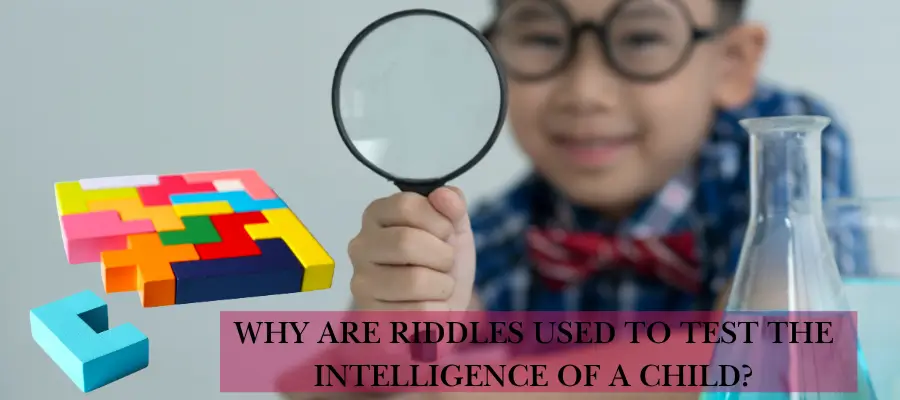
Parents and teachers have used riddles for centuries to challenge how children think. But why are riddles used to test the intelligence of a child in the first place? The short answer: riddles don’t measure intelligence directly, but they reveal a lot about how a child reasons, solves problems, remembers clues, and plays with language.
Riddles work like a window into a child’s thinking process. Watching a child work through a riddle shows how they connect ideas, question their first guess, and reach a solution. This makes riddles a favorite tool in classrooms, at home, and even in early childhood development research, even though they’re not a formal IQ test.
Quick AnswerRiddles are used to test the intelligence of a child because solving them requires logical reasoning, problem-solving, memory, and language skills at the same time. A child must interpret clues, consider several possible answers, and eliminate wrong ones, a process that mirrors real-world thinking and reveals cognitive strengths.
Why Are Riddles Used to Test the Intelligence of a Child?
Riddles challenge several mental abilities at once, which is exactly why they’ve long been linked to intelligence and cognitive development in children.
- Logical reasoning – A child has to connect clues in a sensible order to reach an answer.
- Problem-solving – Riddles present a small “problem” with a hidden solution, similar to real-life challenges.
- Critical thinking – Kids must question obvious answers and think beyond the surface meaning of words.
- Pattern recognition – Many riddles hide a pattern or wordplay trick that a sharp mind can spot.
- Memory – Children need to hold multiple clues in mind while testing possible answers.
- Attention and concentration – Riddles reward kids who listen carefully and don’t miss small details.
- Vocabulary and language skills – Riddles often rely on double meanings, forcing kids to think about words in new ways.
- Creative thinking – Because riddles rarely have an obvious answer, children learn to think sideways instead of following a straight line of logic.
Together, these skills are why riddles for children have earned a reputation as a simple but effective way to test and build young minds.
How Do Riddles Test a Child’s Thinking Skills?
Solving a riddle isn’t random guesswork. It usually follows a clear mental process:
- Listening to the clues – The child hears or reads the riddle and identifies the key details.
- Forming early guesses – Based on the clues, the child starts thinking of possible answers.
- Testing each possibility – The child checks whether a guess actually fits all the clues, not just some of them.
- Eliminating wrong answers – Ideas that don’t match the riddle’s details get dropped.
- Reaching the solution – The child lands on the answer that satisfies every clue at once.
This step-by-step process is exactly how riddles test intelligence in a practical, hands-on way — it mirrors how people solve real problems at school, at work, and in everyday life.
What Skills Can Children Develop by Solving Riddles?
Problem-Solving Skills
Riddles present a mini-challenge with a hidden solution. Working through them regularly helps children build problem-solving skills they can apply to schoolwork and daily situations.
Critical Thinking
Riddles often have a “trick,” so children learn not to accept the first answer that comes to mind. This builds critical thinking skills that carry over into reading comprehension and math.
Logical Reasoning
Many riddles depend on cause-and-effect or step-by-step clues. Following that chain of logic strengthens a child’s overall logical reasoning ability.
Creativity
Because the answer isn’t always obvious, kids learn to think about a problem from unusual angles — a core part of creative thinking.
Memory
Holding onto clues while testing possible answers is a workout for short-term memory and helps with memory and concentration overall.
Concentration
Riddles reward focus. A distracted child is more likely to miss a key detail, so riddles naturally train sustained attention.
Language Development
Riddles introduce new words and double meanings in a fun context, which supports vocabulary growth and overall language development in children.
Observation Skills
Some riddles (especially visual ones) require kids to notice small details, sharpening their observation skills.
Patience and Persistence
Not every riddle is solved on the first try. Working through frustration and trying again builds patience, an underrated part of brain development in children.
Do Riddles Really Measure a Child’s Intelligence?
This is where it’s important to be balanced. Riddles are not the same as a formal intelligence test.
A real IQ test is a standardized, scientifically validated tool administered by trained psychologists under controlled conditions. A riddle, on the other hand, is an informal activity. It can show signs of strong reasoning, memory, or language skills, but it can’t produce a reliable intelligence score on its own.
Some children are naturally strong with words and wordplay, while others are stronger with numbers, spatial reasoning, or hands-on problem-solving. A child who struggles with a wordy riddle might excel at a math riddle or a visual puzzle. That’s why riddles should be treated as a fun learning activity and a general skill builder, not as a scientific measurement of how “smart” a child is.
Why Are Riddles Good for Child Development?
Age-appropriate riddles turn learning into an interactive game rather than a lecture. When a child pauses to think before blurting out an answer, they’re practicing something valuable: thinking before reacting. This single habit supports:
- Better focus during schoolwork
- Stronger reading comprehension (since many riddles rely on interpreting text)
- A growth mindset, since working through a tricky riddle teaches kids that effort leads to success
- Positive associations with learning, since riddles feel like play rather than a test
Used consistently, riddles become a natural, low-pressure way to support mental skills for kids at home, in the classroom, or on a car ride.
Riddles vs. Traditional Intelligence Tests
| Feature | Riddles | Traditional Intelligence Tests |
|---|---|---|
| Purpose | Fun, informal skill-building | Formal measurement of cognitive ability |
| Structure | Casual, varied, no fixed format | Standardized, same format for every child |
| Skills Tested | Logic, language, creativity, memory (informally) | Reasoning, memory, verbal/nonverbal ability (formally scored) |
| Scoring | No official score; right or wrong answer only | Numeric score (e.g., IQ score) compared to age norms |
| Administered By | Parents, teachers, anyone | Trained psychologists or certified professionals |
| Best Used For | Everyday learning, engagement, and fun | Diagnosing learning needs or formal assessment |
What Types of Riddles Are Best for Children?
- Easy riddles – Great for younger kids just learning to reason through clues.
- Logic riddles – Best for children who enjoy step-by-step reasoning.
- Math riddles – Ideal for kids who like numbers and calculations.
- Word riddles – Strengthen vocabulary and highlight double meanings.
- Visual riddles – Good for kids who think in images and patterns.
- Animal riddles – A fun, approachable theme for younger children.
- Educational riddles – Tied to school subjects like science or geography for extra learning value.
The key is matching the riddle to the child’s age and developmental stage. A riddle that’s too advanced can frustrate a young child, while one that’s too simple won’t challenge an older child’s growing mental skills.
How Parents and Teachers Can Use Riddles
- Start simple and gradually increase difficulty as the child grows more confident.
- Give gentle hints instead of the answer, so the child stays engaged in solving it.
- Celebrate effort, not just correct answers — the thinking process matters more than being “right.”
- Use riddles as a bridge into subjects like math, science, or vocabulary.
- Keep it low-pressure. Riddles should feel like play, not a test the child can fail.
- Rotate riddle types (word, logic, math, visual) to build different skills over time.
Frequently Asked Questions
Why are riddles used to test the intelligence of a child?
Riddles challenge logical reasoning, problem-solving, memory, and language skills at the same time, giving parents and teachers insight into how a child thinks even though riddles aren’t a formal IQ measurement.
Do riddles increase a child’s IQ?
Riddles alone don’t directly raise IQ, but regularly solving them can strengthen reasoning, vocabulary, and memory skills that support overall cognitive development.
What skills do riddles develop in children?
Riddles build problem-solving, critical thinking, logical reasoning, creativity, memory, concentration, language skills, and observation skills.
Are riddles good for brain development?
Yes. Riddles exercise multiple areas of thinking at once, including reasoning, memory, and language processing, which supports healthy brain development in children.
At what age can children start solving riddles?
Most children can start with simple riddles around ages 4–6, with more complex logic or wordplay riddles becoming appropriate from age 7 onward.
Can riddles improve problem-solving skills?
Yes. The process of testing clues, eliminating wrong answers, and reaching a solution directly mirrors real-world problem-solving skills.
Are riddles better than traditional tests for children?
Riddles aren’t a replacement for traditional intelligence tests. They’re best used as a fun, everyday tool to build thinking skills, while formal tests are used for structured assessment.
How often should children solve riddles?
A few riddles a week during homework breaks, car rides, or family time is enough to build thinking skills without turning it into a chore.
Conclusion
So, why are riddles used to test the intelligence of a child? Because they naturally combine logical reasoning, problem-solving, memory, language, and creative thinking into one simple activity. Riddles give parents and teachers a fun way to observe how a child thinks — but they are not a stand-alone measure of a child’s overall intelligence. Used the right way, riddles become less about “testing” and more about nurturing curious, confident young minds.
Explore a World of Riddles: Fun Challenges for Every Mind
Benefits of Riddles for Students: 10 Smart Reasons to Try Them