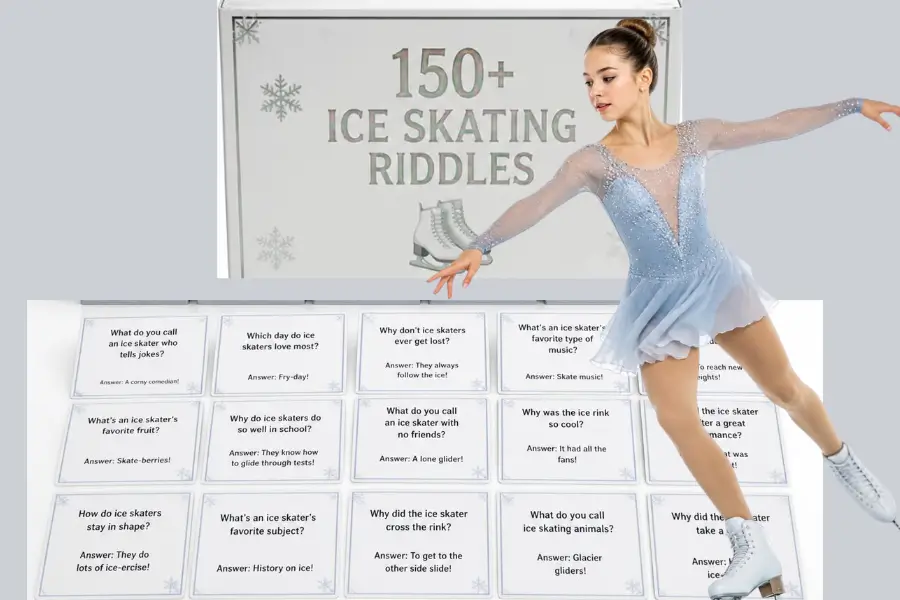
Ice skating is more than just gliding across a frozen surface. It combines balance, movement, speed, focus, and skill. But what if you could explore the world of skating through fun brain teasers? That is exactly what these ice skating riddles with answers are designed to do.
In this collection, you will find 160 ice skating riddles covering everything from skating equipment and rink features to spins, jumps, turns, blades, balance, and skating techniques. Each riddle comes with an answer and an explanation, so you can enjoy the challenge while also learning something new.
These riddles are perfect for ice skating riddles for kids, adults, families, teachers, and skating fans. Younger readers can enjoy the easy clues, while older readers can challenge themselves with riddles about skating movements and techniques.
If you are learning the sport, these riddles can also introduce you to basic ice skating techniques for beginners, common skating terms, rink knowledge, and important ideas related to rules for ice skating.
Whether you are planning a skating-themed activity, looking for riddles for kids, or simply love ice skating, grab your skates and get ready to test your brain. Can you solve all 160?
Ice Skating Riddles
Explore our first collection of ice skating riddles made for curious minds and skating fans. These riddles introduce basic ice skating terms, equipment, and movements in a fun and simple way. They are easy enough for kids while still entertaining for adults who enjoy skating.

You will discover clues about skate blades, ice rinks, balance, and basic skating skills. Each riddle includes an answer and a clear explanation to make learning easier. This collection is perfect for ice skating riddles for kids, classroom activities, family games, and fun challenges.
I help you glide across ice with life.
What am I?
EXPLANATION
FIRST CLUE: Has a blade
SECOND CLUE: Glides across ice
LOGICAL CONNECTION: Ice skates have blades underneath that allow skaters to glide
CONCLUSION: Ice Skate is correct.
On me skating stories unfold.
What am I?
EXPLANATION
FIRST CLUE: Frozen and smooth
SECOND CLUE: Skaters move across me
LOGICAL CONNECTION: An ice rink provides the frozen surface used for skating
CONCLUSION: Ice Rink is correct.
I help protect you everywhere.
What am I?
EXPLANATION
FIRST CLUE: Sits on your head
SECOND CLUE: Helps protect you
LOGICAL CONNECTION: A helmet protects a skater’s head during falls or collisions
CONCLUSION: Helmet is correct.
I help your body glide and move.
What am I?
EXPLANATION
FIRST CLUE: Pushes against the ice
SECOND CLUE: Helps create movement
LOGICAL CONNECTION: A skate blade interacts with the ice to help a skater push and glide
CONCLUSION: Skate Blade is correct.
I keep your foot secure and right.
What am I?
EXPLANATION
FIRST CLUE: Wrap around the skate
SECOND CLUE: Keep the foot secure
LOGICAL CONNECTION: Skate laces tighten the boot around the skater’s foot
CONCLUSION: Skate Laces are correct.
One foot pushes while you glide.
What am I?
EXPLANATION
FIRST CLUE: Involves pushing
SECOND CLUE: Creates a smooth glide
LOGICAL CONNECTION: A skating stride uses a push to move the skater forward
CONCLUSION: Skating Stride is correct.
Without your feet leaving the ground.
What am I?
EXPLANATION
FIRST CLUE: Changes direction
SECOND CLUE: Keeps the skater on the ice
LOGICAL CONNECTION: A skating turn allows a skater to change direction while maintaining contact with the ice
CONCLUSION: Skating Turn is correct.
EXPLANATION
FIRST CLUE: Spins around
SECOND CLUE: Is performed by skaters
LOGICAL CONNECTION: A skating spin is a controlled rotation performed on the ice
CONCLUSION: Skating Spin is correct.
A curving mark that you can find.
What am I?
EXPLANATION
FIRST CLUE: Leaves a trail
SECOND CLUE: Creates marks on ice
LOGICAL CONNECTION: Skate blades can leave visible tracks across the ice
CONCLUSION: Skate Mark is correct.
I bring your skating speed down at last.
What am I?
EXPLANATION
FIRST CLUE: Slows a skater
SECOND CLUE: Controls speed
LOGICAL CONNECTION: A skating stop allows a skater to reduce speed and come to a halt
CONCLUSION: Skating Stop is correct.
Yet without me you may fall easily.
What am I?
EXPLANATION
FIRST CLUE: Cannot be seen
SECOND CLUE: Helps prevent falls
LOGICAL CONNECTION: Balance allows a skater to remain upright while moving across ice
CONCLUSION: Balance is correct.
I keep your fingers warm and clear.
What am I?
EXPLANATION
FIRST CLUE: Covers your hands
SECOND CLUE: Keeps fingers warm
LOGICAL CONNECTION: Gloves protect and warm a skater’s hands in the cold rink
CONCLUSION: Gloves are correct.
Bending me can help your goal.
What am I?
EXPLANATION
FIRST CLUE: Can be bent
SECOND CLUE: Helps with control
LOGICAL CONNECTION: Bending the knees helps skaters maintain balance and control
CONCLUSION: Knees are correct.
For just a moment I am nowhere there.
What am I?
EXPLANATION
FIRST CLUE: Leaves the ice
SECOND CLUE: Happens for a short moment
LOGICAL CONNECTION: A skating jump sends the skater into the air before landing back on the ice
CONCLUSION: Skating Jump is correct.
I help keep skaters from the ledge.
What am I?
EXPLANATION
FIRST CLUE: Surround the rink
SECOND CLUE: Form a barrier
LOGICAL CONNECTION: Rink boards surround the skating surface and help keep skaters inside
CONCLUSION: Rink Boards are correct.
EXPLANATION
FIRST CLUE: Is sharp
SECOND CLUE: Sits beneath the skate
LOGICAL CONNECTION: A skate blade is sharpened to provide control and movement on ice
CONCLUSION: Skate Blade is correct.
After many skaters have passed within.
What am I?
EXPLANATION
FIRST CLUE: Works on rough ice
SECOND CLUE: Makes the surface smooth
LOGICAL CONNECTION: An ice resurfacer restores the skating surface after repeated use
CONCLUSION: Ice Resurfacer is correct.
Choose the wrong one and your turn may slide.
What am I?
EXPLANATION
FIRST CLUE: Has inside and outside types
SECOND CLUE: Helps control turns
LOGICAL CONNECTION: Skates have inside and outside edges that affect movement and direction
CONCLUSION: Skate Edge is correct.
While moving left and moving right.
What am I?
EXPLANATION
FIRST CLUE: Keeps a skater upright
SECOND CLUE: Works during movement
LOGICAL CONNECTION: Skating balance helps maintain control while changing direction
CONCLUSION: Skating Balance is correct.
Where skaters race and turns can meet.
What am I?
EXPLANATION
FIRST CLUE: Cold and smooth
SECOND CLUE: Skaters move across it
LOGICAL CONNECTION: The ice surface provides the frozen area needed for skating
CONCLUSION: Ice Surface is correct.
Also Read : 150+ Fun Riddles for Couples: Romantic and Tricky
Ice Skating Riddles
Test your knowledge with this fun collection of ice skating riddles with answers. These riddles focus on skating gear, rink features, common movements, and useful skating skills. They offer an entertaining way to learn more about ice skating while solving clever clues.

Beginners can discover simple skating terms, while experienced skaters can enjoy testing their knowledge. Every riddle comes with an answer and an easy-to-follow explanation. These riddles are great for kids, adults, teachers, skating fans, and anyone who enjoys brain-teasing activities.
On frozen ground I make you fleet.
What am I?
EXPLANATION
FIRST CLUE: Has two blades
SECOND CLUE: Moves across frozen ground
LOGICAL CONNECTION: Ice skates have blades underneath their boots that help skaters glide
CONCLUSION: Ice Skates are correct.
For skating on me, I am the perfect sheet.
What am I?
EXPLANATION
FIRST CLUE: Cold and smooth
SECOND CLUE: Skaters move across it
LOGICAL CONNECTION: Ice provides the frozen surface needed for skating
CONCLUSION: Ice is correct.
I help your skates feel just right.
What am I?
EXPLANATION
FIRST CLUE: Wrap around the feet
SECOND CLUE: Keep skates secure
LOGICAL CONNECTION: Skate laces tighten the skating boots and hold the feet securely
CONCLUSION: Skate Laces are correct.
I help keep skaters from a fall.
What am I?
EXPLANATION
FIRST CLUE: Stand around the rink
SECOND CLUE: Act like a barrier
LOGICAL CONNECTION: Rink boards form the boundary around the skating surface
CONCLUSION: Rink Boards are correct.
Then forward through the rink I go.
What am I?
EXPLANATION
FIRST CLUE: Pushes against the ice
SECOND CLUE: Moves the skater forward
LOGICAL CONNECTION: A skating stride uses a push against the ice to create forward movement
CONCLUSION: Skating Stride is correct.
Keeping balance is my heavy load.
What am I?
EXPLANATION
FIRST CLUE: Moves backward
SECOND CLUE: Requires balance
LOGICAL CONNECTION: Backward skating lets a skater travel in reverse while maintaining control
CONCLUSION: Backward Skating is correct.
I can make a skater look like a spinning top in space.
What am I?
EXPLANATION
FIRST CLUE: Turns around
SECOND CLUE: Happens on the ice
LOGICAL CONNECTION: A skating spin is a controlled rotation performed on the ice
CONCLUSION: Skating Spin is correct.
Balanced better while you play.
What am I?
EXPLANATION
FIRST CLUE: Can be bent
SECOND CLUE: Helps with balance
LOGICAL CONNECTION: Bending the knees helps a skater maintain stability and control
CONCLUSION: Knees are correct.
But without me you may fall to the side.
What am I?
EXPLANATION
FIRST CLUE: Cannot be seen
SECOND CLUE: Prevents falling
LOGICAL CONNECTION: Balance keeps a skater stable while moving across the ice
CONCLUSION: Balance is correct.
My curved little marks look neat.
What am I?
EXPLANATION
FIRST CLUE: Leaves a trail
SECOND CLUE: Creates marks on the ice
LOGICAL CONNECTION: Skate blades leave tracks and marks as they move across the ice
CONCLUSION: Skate Marks are correct.
I help you stop without hitting the ground.
What am I?
EXPLANATION
FIRST CLUE: Slows a skater
SECOND CLUE: Helps bring a skater to a stop
LOGICAL CONNECTION: A stopping technique helps control speed and stop safely
CONCLUSION: Stopping Technique is correct.
I help you turn and stay put.
What am I?
EXPLANATION
FIRST CLUE: Is sharp
SECOND CLUE: Sits beneath the boot
LOGICAL CONNECTION: The skate blade contacts the ice and helps provide control while skating
CONCLUSION: Skate Blade is correct.
I help protect you everywhere.
What am I?
EXPLANATION
FIRST CLUE: Sits on the head
SECOND CLUE: Provides protection
LOGICAL CONNECTION: A skating helmet helps protect the head from impacts
CONCLUSION: Skating Helmet is correct.
Then I land and skate some more.
What am I?
EXPLANATION
FIRST CLUE: Leaves the ice
SECOND CLUE: Returns to the ice
LOGICAL CONNECTION: A skating jump sends the skater into the air before landing again
CONCLUSION: Skating Jump is correct.
I help your skating path feel right.
What am I?
EXPLANATION
FIRST CLUE: Changes direction
SECOND CLUE: Helps control the skating path
LOGICAL CONNECTION: A skating turn allows a skater to change direction while moving across the ice
CONCLUSION: Skating Turn is correct.
I help your skating journey through.
What am I?
EXPLANATION
FIRST CLUE: Touches the ice
SECOND CLUE: Sits beneath the skate
LOGICAL CONNECTION: The skate blade is the part that contacts the ice during skating
CONCLUSION: Skate Blade is correct.
EXPLANATION
FIRST CLUE: Works on rough ice
SECOND CLUE: Makes the surface smoother
LOGICAL CONNECTION: An ice resurfacer restores the skating surface after heavy use
CONCLUSION: Ice Resurfacer is correct.
Skaters use me when they glide.
What am I?
EXPLANATION
FIRST CLUE: Has inside and outside edges
SECOND CLUE: Used while skating
LOGICAL CONNECTION: Skate edges help skaters control turns, curves, and movement
CONCLUSION: Skate Edge is correct.
I keep your fingers warm to hold.
What am I?
EXPLANATION
FIRST CLUE: Covers the hands
SECOND CLUE: Keeps fingers warm
LOGICAL CONNECTION: Gloves help protect a skater’s hands from the cold
CONCLUSION: Gloves are correct.
With blades beneath their feet.
What am I?
EXPLANATION
FIRST CLUE: Is a frozen skating place
SECOND CLUE: Skaters use it with their blades
LOGICAL CONNECTION: An ice rink is a prepared frozen surface where people skate
CONCLUSION: Ice Rink is correct.
Must Read : 150+ Hiking Riddles for Outdoor Adventures
Spins, Jumps & Figure Skating Challenges
Get ready for another exciting collection of ice skating riddles that combines fun with learning. This group explores jumps, spins, turns, skate blades, skating equipment, and different rink activities. Some clues are easy, while others require a little more careful thinking before you reveal the answer.

The riddles help readers learn interesting facts about ice skating in an enjoyable way. Each one includes a clear answer and simple explanation for better understanding. Enjoy these riddles at home, school, parties, skating events, or as part of a daily challenge.
Across my surface skaters go.
What am I?
EXPLANATION
FIRST CLUE: Cold skating surface
SECOND CLUE: Skaters move across it
LOGICAL CONNECTION: An ice rink provides a frozen surface for skating
CONCLUSION: Ice Rink is correct.
Beneath your boot I stay firmly shut.
What am I?
EXPLANATION
FIRST CLUE: Has a sharp edge
SECOND CLUE: Found beneath a skate boot
LOGICAL CONNECTION: A skate blade supports movement and control on the ice
CONCLUSION: Skate Blade is correct.
EXPLANATION
FIRST CLUE: Helps you move
SECOND CLUE: Travels across ice
LOGICAL CONNECTION: A skate allows a person to move smoothly over a frozen surface
CONCLUSION: Skate is correct.
Especially when you tumble down.
What am I?
EXPLANATION
FIRST CLUE: Protects the head
SECOND CLUE: Useful during falls
LOGICAL CONNECTION: A helmet provides protection for the skater’s head
CONCLUSION: Helmet is correct.
Using your edges here and there.
What am I?
EXPLANATION
FIRST CLUE: Creates a curve
SECOND CLUE: Uses the skate edges
LOGICAL CONNECTION: Skaters use their blade edges to create controlled turns
CONCLUSION: Skating Edge Turn is correct.
After gliding quite a while.
What am I?
EXPLANATION
FIRST CLUE: Stops a moving skater
SECOND CLUE: Uses the blades against the ice
LOGICAL CONNECTION: A hockey stop is a skating technique used to slow down and stop quickly
CONCLUSION: Hockey Stop is correct.
Yet my blades stay on the ground.
What am I?
EXPLANATION
FIRST CLUE: Moves around repeatedly
SECOND CLUE: Happens on the ice
LOGICAL CONNECTION: A skating spin involves controlled rotation on the ice
CONCLUSION: Spin is correct.
For one short moment I am in the air.
What am I?
EXPLANATION
FIRST CLUE: Moves upward
SECOND CLUE: Leaves the ice briefly
LOGICAL CONNECTION: A skating jump sends the skater into the air before landing
CONCLUSION: Skating Jump is correct.
Without me you might simply fall.
What am I?
EXPLANATION
FIRST CLUE: Keeps you upright
SECOND CLUE: Helps prevent falling
LOGICAL CONNECTION: Balance allows a skater to stay stable while moving
CONCLUSION: Balance is correct.
Without me your fit may not feel great.
What am I?
EXPLANATION
FIRST CLUE: Tied around the skate
SECOND CLUE: Helps create a secure fit
LOGICAL CONNECTION: Skate laces keep the boot snug around the skater’s foot
CONCLUSION: Skate Laces are correct.
I protect them when the rink is cold.
What am I?
EXPLANATION
FIRST CLUE: Worn on the hands
SECOND CLUE: Protects fingers from cold
LOGICAL CONNECTION: Gloves keep a skater’s hands warm and protected
CONCLUSION: Gloves are correct.
I help your skating feel smooth and nice.
What am I?
EXPLANATION
FIRST CLUE: Located beneath the foot
SECOND CLUE: Contacts the ice
LOGICAL CONNECTION: The skate blade connects the boot to the ice and enables gliding
CONCLUSION: Skate Blade is correct.
I help show where the skater swerves.
What am I?
EXPLANATION
FIRST CLUE: Forms a path
SECOND CLUE: Can bend and curve
LOGICAL CONNECTION: A skate trail shows the path created by a skater’s blade
CONCLUSION: Skate Trail is correct.
Until balance starts to feel right.
What am I?
EXPLANATION
FIRST CLUE: Beginners can hold it
SECOND CLUE: Helps with early balance
LOGICAL CONNECTION: The rink rail can provide support while a new skater learns basic skills
CONCLUSION: Rink Rail is correct.
After skaters have crossed the floor.
What am I?
EXPLANATION
FIRST CLUE: Smooths the ice
SECOND CLUE: Used after skating sessions
LOGICAL CONNECTION: An ice resurfacer restores the surface after repeated skating
CONCLUSION: Ice Resurfacer is correct.
Skaters and players follow my designs.
What am I?
EXPLANATION
FIRST CLUE: Contains lines
SECOND CLUE: Used by skaters and players
LOGICAL CONNECTION: Rink markings divide and organize different areas of the ice
CONCLUSION: Rink Markings are correct.
I help decide the path you do.
What am I?
EXPLANATION
FIRST CLUE: Can vary in depth
SECOND CLUE: Affects the skating path
LOGICAL CONNECTION: The skate edge controls how the blade interacts with the ice during turns and glides
CONCLUSION: Skate Edge is correct.
Push and glide and then return.
What am I?
EXPLANATION
FIRST CLUE: A basic skating skill
SECOND CLUE: Uses pushing and gliding
LOGICAL CONNECTION: Basic skating teaches beginners how to push and glide across the ice
CONCLUSION: Basic Skating is correct.
I help keep your skating balance long.
What am I?
EXPLANATION
FIRST CLUE: Is a body position
SECOND CLUE: Helps with balance
LOGICAL CONNECTION: A stable skating stance gives the skater better control and balance
CONCLUSION: Skating Stance is correct.
I am where every skating path is made.
What am I?
EXPLANATION
FIRST CLUE: Cold beneath the blade
SECOND CLUE: Holds every skating path
LOGICAL CONNECTION: The ice surface is the frozen area where skaters glide, turn, and practice
CONCLUSION: Ice Surface is correct.
Ice Rink Skills & Skating Techniques
Discover a fresh collection of ice skating riddles for kids and adults designed to entertain and educate. These riddles cover ice rinks, skating techniques, safety equipment, skating movements, and important skills. They provide a fun way for beginners to become familiar with ice skating while encouraging readers to think carefully about each clue.
The simple explanations make the answers easy to understand. Whether you are a young learner or an adult skating enthusiast, these riddles offer an enjoyable challenge. They are perfect for family activities, classroom games, and skating-themed challenges.
On the ice I make skaters feel.
What am I?
EXPLANATION
FIRST CLUE: Forms a circle
SECOND CLUE: Happens on the ice
LOGICAL CONNECTION: A skating spin is a controlled circular movement performed by a skater
CONCLUSION: Skating Spin is correct.
Skaters glide from side to side.
What am I?
EXPLANATION
FIRST CLUE: Is a frozen floor
SECOND CLUE: Skaters glide across it
LOGICAL CONNECTION: An ice rink provides a prepared frozen surface for skating
CONCLUSION: Ice Rink is correct.
Against the ice I take root.
What am I?
EXPLANATION
FIRST CLUE: Sits beneath the boot
SECOND CLUE: Touches the ice
LOGICAL CONNECTION: The skate blade is attached beneath the boot and contacts the ice
CONCLUSION: Skate Blade is correct.
I guide your path across the line.
What am I?
EXPLANATION
FIRST CLUE: Helps with turning
SECOND CLUE: Guides skating direction
LOGICAL CONNECTION: The edges of a skate blade help a skater control curves and turns
CONCLUSION: Skate Edges are correct.
Without me falling is your fate.
What am I?
EXPLANATION
FIRST CLUE: Keeps you stable
SECOND CLUE: Helps prevent falling
LOGICAL CONNECTION: Balance is essential for staying upright while skating
CONCLUSION: Balance is correct.
I help you stop before you fly.
What am I?
EXPLANATION
FIRST CLUE: Reduces speed
SECOND CLUE: Helps a skater stop
LOGICAL CONNECTION: A skating stop is used to control speed and bring a skater to a halt
CONCLUSION: Skating Stop is correct.
Then I return without a stair.
What am I?
EXPLANATION
FIRST CLUE: Goes into the air
SECOND CLUE: Lands back on the ice
LOGICAL CONNECTION: A skating jump briefly lifts the skater off the ice before landing
CONCLUSION: Skating Jump is correct.
I help your boots stay in place.
What am I?
EXPLANATION
FIRST CLUE: Pulled tight
SECOND CLUE: Secures the boots
LOGICAL CONNECTION: Skate laces keep the skating boots fitted securely around the feet
CONCLUSION: Skate Laces are correct.
I keep your hands warm to hold.
What am I?
EXPLANATION
FIRST CLUE: Worn on the hands
SECOND CLUE: Provides warmth
LOGICAL CONNECTION: Skating gloves help protect the hands from the cold rink environment
CONCLUSION: Skating Gloves are correct.
EXPLANATION
FIRST CLUE: Surrounds the ice
SECOND CLUE: Acts as a barrier
LOGICAL CONNECTION: Rink boards form the boundary around the skating surface
CONCLUSION: Rink Boards are correct.
Then glide quietly without a rush.
What am I?
EXPLANATION
FIRST CLUE: Begins with a push
SECOND CLUE: Ends with a glide
LOGICAL CONNECTION: A skating stride combines pushing and gliding to move across the ice
CONCLUSION: Skating Stride is correct.
While facing forward all around.
What am I?
EXPLANATION
FIRST CLUE: Travels backward
SECOND CLUE: Happens on frozen ground
LOGICAL CONNECTION: Backward skating allows a skater to move in reverse across the ice
CONCLUSION: Backward Skating is correct.
Players follow me to play it right.
What am I?
EXPLANATION
FIRST CLUE: Is painted on the ice
SECOND CLUE: Helps organize play
LOGICAL CONNECTION: Rink lines mark specific areas and boundaries on the ice
CONCLUSION: Rink Line is correct.
After many blades have made it beat.
What am I?
EXPLANATION
FIRST CLUE: Is a machine
SECOND CLUE: Makes the ice smoother
LOGICAL CONNECTION: An ice resurfacer restores the skating surface after heavy use
CONCLUSION: Ice Resurfacer is correct.
I help your skate when you glide.
What am I?
EXPLANATION
FIRST CLUE: Has inside and outside types
SECOND CLUE: Helps during gliding
LOGICAL CONNECTION: Inside and outside skate edges help control movement on the ice
CONCLUSION: Skate Edge is correct.
Skaters trust me with their daring pairs.
What am I?
EXPLANATION
FIRST CLUE: Is a cold surface
SECOND CLUE: Used by skaters
LOGICAL CONNECTION: Rink ice is prepared in layers to create a suitable skating surface
CONCLUSION: Rink Ice is correct.
I keep your skating session calm.
What am I?
EXPLANATION
FIRST CLUE: Protects the head
SECOND CLUE: Used for safety
LOGICAL CONNECTION: A helmet provides head protection during skating
CONCLUSION: Helmet is correct.
With knees bent and strength inside.
What am I?
EXPLANATION
FIRST CLUE: Describes how a skater stands
SECOND CLUE: Uses bent knees
LOGICAL CONNECTION: A proper skating stance helps a skater maintain stability and control
CONCLUSION: Skating Stance is correct.
From one direction to another as you skate away.
What am I?
EXPLANATION
FIRST CLUE: Changes direction
SECOND CLUE: Happens while skating
LOGICAL CONNECTION: A skating turn redirects the skater’s movement across the ice
CONCLUSION: Skating Turn is correct.
Every jump and glide begins within.
What am I?
EXPLANATION
FIRST CLUE: Is beneath every skating move
SECOND CLUE: Supports spins, jumps, and glides
LOGICAL CONNECTION: The ice surface provides the foundation for skating movements
CONCLUSION: Ice Surface is correct.
Blades, Balance & Advanced Skating Clues
Put your skating knowledge to the test with riddles centered around skate blades, balance, speed, gliding, spins, and skating control. These clues go beyond the most basic skating ideas and encourage readers to think about how skaters stay steady while moving across slippery ice.
Kids can enjoy the playful challenge, while adults and skating enthusiasts can test what they know about the sport. Every riddle includes a straightforward answer and logical explanation, making this collection both entertaining and educational.
I help you glide across the ice just right.
What am I?
EXPLANATION
FIRST CLUE: The object has sharp edges.
SECOND CLUE: It helps a skater move across ice.
LOGICAL CONNECTION: A skate blade has sharp edges that grip the ice and allow controlled movement.
CONCLUSION: Skate blade is correct.
Fast or slow, smooth or wild.
Skaters use me every time they move.
What am I?
EXPLANATION
FIRST CLUE: I can happen in different directions and speeds.
SECOND CLUE: Skaters use me whenever they move.
LOGICAL CONNECTION: Skating includes many types of movement across the ice.
CONCLUSION: Skating is correct.
But games and races happen on me.
What am I?
EXPLANATION
FIRST CLUE: It has a frozen surface.
SECOND CLUE: People play sports and skate on it.
LOGICAL CONNECTION: An ice rink provides a prepared ice surface for skating and hockey.
CONCLUSION: Ice rink is correct.
But I am not a steering wheel.
Lean one way and change your path.
What am I?
EXPLANATION
FIRST CLUE: Leaning changes the direction of a skater.
SECOND CLUE: It does not require a steering wheel.
LOGICAL CONNECTION: Skaters use their body position and lean to control turns.
CONCLUSION: Body lean is correct.
But strong around your head.
You hope I never need to save you.
What am I?
EXPLANATION
FIRST CLUE: The object protects the head.
SECOND CLUE: It helps reduce injury during a fall or collision.
LOGICAL CONNECTION: A skating helmet provides head protection while skating.
CONCLUSION: Helmet is correct.
But I never take a step.
I hold the foot safely in place.
What am I?
EXPLANATION
FIRST CLUE: It surrounds and supports the foot.
SECOND CLUE: It moves whenever the skater moves.
LOGICAL CONNECTION: The skate boot holds the foot and connects it to the blade.
CONCLUSION: Skate boot is correct.
But I disappear when you leave.
Skaters create me with their blades.
What am I?
EXPLANATION
FIRST CLUE: The mark appears directly on the ice.
SECOND CLUE: Skate blades can leave lines and scratches behind.
LOGICAL CONNECTION: A skate blade creates temporary marks as it moves over the ice.
CONCLUSION: Ice mark is correct.
But I am not a wheel.
Skaters use me to practice turning.
What am I?
EXPLANATION
FIRST CLUE: The shape has no beginning or end.
SECOND CLUE: Skaters often practice turns along curved paths.
LOGICAL CONNECTION: A circle provides a simple path for practicing skating turns.
CONCLUSION: Circle is correct.
Then another one follows.
I help a skater gain speed.
What am I?
EXPLANATION
FIRST CLUE: A stride is a pushing movement.
SECOND CLUE: Skaters repeat strides to move faster.
LOGICAL CONNECTION: Skating strides provide forward propulsion across the ice.
CONCLUSION: Stride is correct.
But I help you stay balanced.
Bend me carefully when you skate.
What am I?
EXPLANATION
FIRST CLUE: The knees can bend into different positions.
SECOND CLUE: Proper knee bending supports balance and control.
LOGICAL CONNECTION: Skaters use knee position to absorb movement and maintain stability.
CONCLUSION: Knee position is correct.
EXPLANATION
FIRST CLUE: Lines on a hockey rink have specific purposes.
SECOND CLUE: Players must follow rules connected to rink markings.
LOGICAL CONNECTION: Hockey lines help divide the playing surface and determine plays.
CONCLUSION: Hockey line is correct.
Yet skaters call me home.
Without me, their blades cannot glide.
What am I?
EXPLANATION
FIRST CLUE: The surface is cold and slippery.
SECOND CLUE: Skaters need it for skating.
LOGICAL CONNECTION: Frozen ice provides the surface on which skate blades glide.
CONCLUSION: Ice is correct.
But I am not a mitten for snow.
Skaters wear me for warmth and safety.
What am I?
EXPLANATION
FIRST CLUE: The item covers and protects the hands.
SECOND CLUE: It can provide warmth and protection from scrapes.
LOGICAL CONNECTION: Skating gloves help keep hands warm and offer some protection.
CONCLUSION: Skating gloves are correct.
For a moment, you are flying.
What am I?
EXPLANATION
FIRST CLUE: Both feet leave the skating surface.
SECOND CLUE: The skater becomes briefly airborne.
LOGICAL CONNECTION: A jump lifts the skater completely off the ice.
CONCLUSION: Jump is correct.
But your feet may stay close together.
I can be slow, fast, or repeated.
What am I?
EXPLANATION
FIRST CLUE: The body rotates around an axis.
SECOND CLUE: Spins can vary in speed and duration.
LOGICAL CONNECTION: A skating spin is a controlled rotational movement on the ice.
CONCLUSION: Spin is correct.
Using your blade against the ice.
I help keep you from going too far.
What am I?
EXPLANATION
FIRST CLUE: The movement reduces speed.
SECOND CLUE: Skaters use their blades to control motion.
LOGICAL CONNECTION: A skating stop uses blade contact and body control to end forward movement.
CONCLUSION: Stop is correct.
Where one foot can lead the way.
Practice makes me smoother every day.
What am I?
EXPLANATION
FIRST CLUE: The skater balances on one foot.
SECOND CLUE: It requires practice and control.
LOGICAL CONNECTION: A one-foot glide is a basic skating skill that develops balance.
CONCLUSION: One-foot glide is correct.
But I can make you fly across the ice.
Push with one foot and move with the other.
What am I?
EXPLANATION
FIRST CLUE: The clue compares skating movement to flying.
SECOND CLUE: A skater pushes with one foot to move forward.
LOGICAL CONNECTION: A skating stride creates forward motion across the ice.
CONCLUSION: Skating stride is correct.
I can make a rink smooth and fast.
Machines help keep me fresh.
What am I?
EXPLANATION
FIRST CLUE: Ice can appear clear or nearly transparent.
SECOND CLUE: Smooth ice improves skating conditions.
LOGICAL CONNECTION: Rink maintenance machines resurface the ice to keep it smooth.
CONCLUSION: Fresh ice is correct.
Even when the ice wants you down.
Every beginner must learn me.
What am I?
EXPLANATION
FIRST CLUE: The skill helps a skater remain upright.
SECOND CLUE: Beginners need it before learning advanced moves.
LOGICAL CONNECTION: Balance is one of the most important basic ice skating skills.
CONCLUSION: Balance is correct.
Skating Skills, Hockey Lines & Rink Knowledge
This category combines ice skating skills with interesting rink features and hockey-related clues. Readers can explore ideas such as skating lines, ice markings, movement, equipment, and the different ways people use an ice rink. The riddles encourage observation and problem-solving while introducing useful skating vocabulary.
They are suitable for ice skating riddles for kids and adults and can be used during family games, school activities, skating events, or as fun daily brain challenges. The simple explanations also make each answer easier to understand.
But I am not a knife.
I carry you smoothly over frozen ground.
What am I?
EXPLANATION
FIRST CLUE: The object has a sharp edge underneath.
SECOND CLUE: It moves across frozen ground.
LOGICAL CONNECTION: An ice skate blade allows a skater to glide over the ice.
CONCLUSION: Ice skate blade is correct.
With feet crossing as you turn.
Skaters practice me again and again.
What am I?
EXPLANATION
FIRST CLUE: The move can look like dancing.
SECOND CLUE: The feet cross during the movement.
LOGICAL CONNECTION: Crossovers help skaters travel around curves while maintaining speed.
CONCLUSION: Crossovers are correct.
And I can send you backward.
Skaters use me to change direction.
What am I?
EXPLANATION
FIRST CLUE: The movement is a skating turn.
SECOND CLUE: It can change the skater’s direction without jumping.
LOGICAL CONNECTION: A three-turn changes the skating direction while the blade remains on the ice.
CONCLUSION: Three-turn is correct.
Drawn by a blade as you glide.
I can curve, loop, or travel straight.
What am I?
EXPLANATION
FIRST CLUE: A skate blade can leave a visible line.
SECOND CLUE: The line can follow different patterns.
LOGICAL CONNECTION: A skating trace is the mark created by a skate blade moving over ice.
CONCLUSION: Skating trace is correct.
Keeping your foot steady and snug.
Without me, your skate may feel loose.
What am I?
EXPLANATION
FIRST CLUE: The support surrounds the ankle.
SECOND CLUE: It helps keep the foot stable inside the skate.
LOGICAL CONNECTION: Proper ankle support helps a skater maintain control and stability.
CONCLUSION: Skate ankle support is correct.
But I am not a road.
Skaters follow me when making a turn.
What am I?
EXPLANATION
FIRST CLUE: The path changes direction gradually.
SECOND CLUE: Skaters travel along curves during turns.
LOGICAL CONNECTION: A curve gives a skater a smooth path for changing direction.
CONCLUSION: Curve is correct.
Even though I face the wrong way.
You push the ice with special movements.
What am I?
EXPLANATION
FIRST CLUE: The movement travels away from the direction a skater normally faces.
SECOND CLUE: Special pushes help create backward motion.
LOGICAL CONNECTION: Backward skating requires controlled movements that send the skater backward.
CONCLUSION: Backward skating is correct.
Not too high and not too low.
I help prepare a skater for many moves.
What am I?
EXPLANATION
FIRST CLUE: The knees bend during this position.
SECOND CLUE: It supports many basic skating movements.
LOGICAL CONNECTION: A good knee bend improves balance, control, and power.
CONCLUSION: Knee bend is correct.
Where tired skaters can rest.
You leave the rink but stay nearby.
What am I?
EXPLANATION
FIRST CLUE: The area is next to the skating surface.
SECOND CLUE: Skaters can use it when they need a break.
LOGICAL CONNECTION: A rinkside area provides space beside the ice for skaters and equipment.
CONCLUSION: Rinkside area is correct.
After many blades have passed.
I look like a giant machine.
What am I?
EXPLANATION
FIRST CLUE: The machine works on the ice.
SECOND CLUE: It restores a smoother skating surface.
LOGICAL CONNECTION: An ice resurfacer cleans and smooths the rink after skating activity.
CONCLUSION: Ice resurfacer is correct.
Made with one skate at a time.
Repeat me and you gain speed.
What am I?
EXPLANATION
FIRST CLUE: A skater pushes against the ice.
SECOND CLUE: Repeated pushes create forward movement.
LOGICAL CONNECTION: The push-off is the action that helps propel a skater forward.
CONCLUSION: Push-off is correct.
I help divide the rink into sections.
Players know where they are by me.
What am I?
EXPLANATION
FIRST CLUE: Markings can appear in different colors.
SECOND CLUE: They divide or identify areas on the rink.
LOGICAL CONNECTION: Rink markings help organize the skating or hockey surface.
CONCLUSION: Rink marking is correct.
But I am thinner than a boot.
I hide inside your skate.
What am I?
EXPLANATION
FIRST CLUE: The item goes inside the skate.
SECOND CLUE: It keeps the feet comfortable and warm.
LOGICAL CONNECTION: Skating socks protect the feet from cold and reduce rubbing inside the skate.
CONCLUSION: Skating socks are correct.
And a skater enters me during a jump.
For one short moment, the ice is far below.
What am I?
EXPLANATION
FIRST CLUE: A skater enters this space during a jump.
SECOND CLUE: The skater’s feet leave the ice.
LOGICAL CONNECTION: During a jump, the skater becomes airborne.
CONCLUSION: Air is correct.
But I can change where you go.
Beginners learn me before harder tricks.
What am I?
EXPLANATION
FIRST CLUE: The movement changes direction.
SECOND CLUE: It is easier than advanced skating tricks.
LOGICAL CONNECTION: Basic turns teach beginners how to control direction on the ice.
CONCLUSION: Basic turn is correct.
But skaters depend on me.
Keep me smooth and they can glide.
What am I?
EXPLANATION
FIRST CLUE: The surface is slippery.
SECOND CLUE: Skaters need it to glide.
LOGICAL CONNECTION: Properly maintained rink ice allows smooth skating.
CONCLUSION: Rink ice is correct.
But skaters follow me in patterns.
I may form loops and circles on the ice.
What am I?
EXPLANATION
FIRST CLUE: The pattern exists on the skating surface.
SECOND CLUE: It can include loops and circles.
LOGICAL CONNECTION: Skaters use different patterns when practicing moves and routines.
CONCLUSION: Skating pattern is correct.
But I never speak.
I touch the ice and help create motion.
What am I?
EXPLANATION
FIRST CLUE: The object touches the ice.
SECOND CLUE: It helps the skater move.
LOGICAL CONNECTION: The skate blade connects the skater to the ice and supports gliding.
CONCLUSION: Skate blade is correct.
And every skater wants me.
I help you remain steady on one or two feet.
What am I?
EXPLANATION
FIRST CLUE: Stability helps prevent unwanted falls.
SECOND CLUE: Skaters need it while standing and moving.
LOGICAL CONNECTION: Stability allows a skater to control their body and remain steady.
CONCLUSION: Stability is correct.
Where your body follows the music.
You glide, turn, and pose for a crowd.
What am I?
EXPLANATION
FIRST CLUE: The movement can follow music.
SECOND CLUE: It combines gliding, turns, and poses.
LOGICAL CONNECTION: A figure skating routine combines skating skills into a planned performance.
CONCLUSION: Figure skating routine is correct.
Turns, Jumps & Ice Skating Techniques
Challenge yourself with riddles about turns, jumps, footwork, balance, and other skating techniques. This collection helps readers discover how different movements work while keeping the learning process entertaining. Some clues describe movements in creative ways, so solvers need to think carefully before revealing the answer.
The riddles are useful for beginners who want to learn skating vocabulary and for experienced fans who enjoy testing their knowledge. They also make greatGliding, Spins, Stops & Skating Mastery (141–160)
End the collection with a challenging group of riddles covering gliding, stopping, spinning, transitions, balance, and overall skating control. These clues bring together many of the skills and concepts explored throughout the earlier categories.
Readers can test how well they understand ice skating while solving creative questions about movement and technique. Each riddle includes an answer and clear explanation, making the collection enjoyable for both learning and entertainment.
Whether you are searching for ice skating riddles for kids, adult challenges, or fun skating activities, this final category offers plenty of brain-teasing fun.or classrooms, parties, family activities, and skating-themed games.
Just push me against the ice.
The stronger your push, the farther you may go.
What am I?
EXPLANATION
FIRST CLUE: The movement does not need a motor.
SECOND CLUE: A skater pushes against the ice to create motion.
LOGICAL CONNECTION: A skating push produces the force needed to move across the rink.
CONCLUSION: Skating push is correct.
But I am not made for a house.
Players may bump into me during a game.
What am I?
EXPLANATION
FIRST CLUE: The object surrounds the skating surface.
SECOND CLUE: Hockey players can collide with it.
LOGICAL CONNECTION: Rink boards form the boundary around an ice hockey rink.
CONCLUSION: Rink boards are correct.
But I am not for sitting down.
Skaters use me to practice balance.
What am I?
EXPLANATION
FIRST CLUE: The clue describes something that looks like a small seat.
SECOND CLUE: It can assist with skating practice.
LOGICAL CONNECTION: A skating stool can be used during beginner exercises to support balance practice.
CONCLUSION: Skating stool is correct.
But I am not a finger.
Turn me slightly and your direction can change.
What am I?
EXPLANATION
FIRST CLUE: The blade can influence the direction of travel.
SECOND CLUE: Changing its angle helps create turns.
LOGICAL CONNECTION: Skaters use their blades and body position to control direction.
CONCLUSION: Skate blade is correct.
Helping you race around a bend.
I look simple but take practice.
What am I?
EXPLANATION
FIRST CLUE: The feet cross during this skating movement.
SECOND CLUE: It helps skaters travel around curves.
LOGICAL CONNECTION: Crossovers allow skaters to maintain speed while turning.
CONCLUSION: Crossover is correct.
Named after a number.
I leave a curved mark on the ice.
What am I?
EXPLANATION
FIRST CLUE: The move has a number in its name.
SECOND CLUE: It creates a curved tracing on the ice.
LOGICAL CONNECTION: A three-turn is a figure skating turn that changes direction on one foot.
CONCLUSION: Three-turn is correct.
Drawn with a skate on ice.
I can be part of a skating routine.
What am I?
EXPLANATION
FIRST CLUE: The movement creates an arc.
SECOND CLUE: Skaters create curved paths using the edges of their blades.
LOGICAL CONNECTION: Using an edge allows a skater to create controlled curves and arcs.
CONCLUSION: Edge is correct.
Before stepping onto the frozen floor.
What am I?
EXPLANATION
FIRST CLUE: Skaters prepare there before entering the rink.
SECOND CLUE: They can change footwear in this area.
LOGICAL CONNECTION: A changing room gives skaters a place to change clothes and shoes.
CONCLUSION: Changing room is correct.
But I am not a ladder.
I happen when both feet leave the ice.
What am I?
EXPLANATION
FIRST CLUE: The skater rises above the ice.
SECOND CLUE: Both feet leave the surface.
LOGICAL CONNECTION: A jump temporarily lifts the skater into the air.
CONCLUSION: Jump is correct.
Or I can go the other way.
Skaters use me to show control.
What am I?
EXPLANATION
FIRST CLUE: The movement can rotate in either direction.
SECOND CLUE: It requires balance and control.
LOGICAL CONNECTION: A skating spin rotates the skater around an axis.
CONCLUSION: Spin is correct.
But children do not need swings.
They glide instead of running.
What am I?
EXPLANATION
FIRST CLUE: The place has a frozen surface.
SECOND CLUE: People glide across it instead of running.
LOGICAL CONNECTION: An ice rink provides a safe prepared surface for skating.
CONCLUSION: Ice rink is correct.
I keep you upright on slippery ice.
Lose me and you may fall.
What am I?
EXPLANATION
FIRST CLUE: The skill helps prevent falling.
SECOND CLUE: Beginners need it while learning to skate.
LOGICAL CONNECTION: Balance allows skaters to control their body on the ice.
CONCLUSION: Balance is correct.
But I am not a turtle.
Wear me on your head when safety matters.
What am I?
EXPLANATION
FIRST CLUE: The object protects the head.
SECOND CLUE: It acts like a protective shell.
LOGICAL CONNECTION: A helmet helps protect a skater’s head from impacts.
CONCLUSION: Helmet is correct.
That wraps around your foot.
Tighten me and you feel secure.
What am I?
EXPLANATION
FIRST CLUE: The part surrounds the foot.
SECOND CLUE: It can be tightened for a secure fit.
LOGICAL CONNECTION: The skate boot holds and supports the foot during skating.
CONCLUSION: Skate boot is correct.
But I am not a drawing.
I can cover the ice with tiny lines.
What am I?
EXPLANATION
FIRST CLUE: The marks appear when blades contact the ice.
SECOND CLUE: They can form many small lines.
LOGICAL CONNECTION: Skate blades naturally create scratches and traces on the ice.
CONCLUSION: Ice scratches are correct.
But I am not a brake pedal.
Press or angle your blade correctly,
And your speed begins to fade.
What am I?
EXPLANATION
FIRST CLUE: The movement reduces speed.
SECOND CLUE: The skate blade helps create the stopping action.
LOGICAL CONNECTION: Skaters use different stopping techniques to slow down and stop.
CONCLUSION: Skating stop is correct.
Where one foot glides while the other rests.
Beginners practice me to gain confidence.
What am I?
EXPLANATION
FIRST CLUE: The skater moves on one foot.
SECOND CLUE: Beginners use it to improve confidence and balance.
LOGICAL CONNECTION: One-foot gliding develops control and stability on the ice.
CONCLUSION: One-foot glide is correct.
And I become smooth with careful work.
A machine visits me to make me better.
What am I?
EXPLANATION
FIRST CLUE: The surface is cold and frozen.
SECOND CLUE: A machine can smooth and maintain it.
LOGICAL CONNECTION: Rink ice needs regular resurfacing to provide good skating conditions.
CONCLUSION: Rink ice is correct.
But I cannot give directions aloud.
You can see me painted on the ice.
What am I?
EXPLANATION
FIRST CLUE: The object is visible on the ice.
SECOND CLUE: It helps define areas and positions.
LOGICAL CONNECTION: Rink lines mark important boundaries and zones on the skating surface.
CONCLUSION: Rink line is correct.
With music, spins, jumps, and grace.
Crowds watch me like a show.
What am I?
EXPLANATION
FIRST CLUE: The activity combines skating with dance-like movements.
SECOND CLUE: It can include music, spins, jumps, and artistic performance.
LOGICAL CONNECTION: Figure skating combines athletic skating skills with choreography and artistic expression.
CONCLUSION: Figure skating is correct.
I help you slow down with style.
Beginners often learn me first.
What am I?
EXPLANATION
FIRST CLUE: The movement goes outward to the sides.
SECOND CLUE: It helps a skater reduce speed.
LOGICAL CONNECTION: A snowplow stop uses the skate blades to create friction and slow the skater.
CONCLUSION: Snowplow stop is correct.
Worn under your skating clothes.
I help keep cold air away.
What am I?
EXPLANATION
FIRST CLUE: The clothing sits underneath other clothes.
SECOND CLUE: It helps keep the body warm.
LOGICAL CONNECTION: A base layer provides warmth and comfort during skating.
CONCLUSION: Base layer is correct.
With no need to hurry.
The skater stretches the movement across the ice.
What am I?
EXPLANATION
FIRST CLUE: The movement travels smoothly across the ice.
SECOND CLUE: It does not require quick steps.
LOGICAL CONNECTION: A glide lets a skater travel smoothly while maintaining momentum.
CONCLUSION: Glide is correct.
Where the skater changes edges.
I can make a smooth curve appear.
What am I?
EXPLANATION
FIRST CLUE: The movement involves changing the blade edge.
SECOND CLUE: It creates a controlled curved path.
LOGICAL CONNECTION: Edge turns use the inside or outside edge of a skate blade to change direction.
CONCLUSION: Edge turn is correct.
I can become faster and faster.
The arms may pull inward to help.
What am I?
EXPLANATION
FIRST CLUE: The skater rotates around a central point.
SECOND CLUE: Pulling the arms inward can increase rotational speed.
LOGICAL CONNECTION: A spin is a controlled rotation performed on the ice.
CONCLUSION: Spin is correct.
But I am not jewelry.
I help keep a skater warm.
What am I?
EXPLANATION
FIRST CLUE: The item is worn around the neck.
SECOND CLUE: It provides warmth in a cold rink.
LOGICAL CONNECTION: A neck warmer helps protect the neck from cold air.
CONCLUSION: Neck warmer is correct.
But I never touch the ice.
I move from wide to narrow during skating.
What am I?
EXPLANATION
FIRST CLUE: The object does not directly touch the ice.
SECOND CLUE: Its position can change during movement.
LOGICAL CONNECTION: Arm position helps skaters maintain balance and control while moving.
CONCLUSION: Arm position is correct.
But I can change your direction.
Skaters use me between bigger moves.
What am I?
EXPLANATION
FIRST CLUE: It is a small skating movement.
SECOND CLUE: It helps connect different skating movements.
LOGICAL CONNECTION: Transition steps allow skaters to change direction or prepare for another skill.
CONCLUSION: Transition step is correct.
“This area has a special job.”
You can find me painted on hockey ice.
What am I?
EXPLANATION
FIRST CLUE: The mark appears on the hockey rink.
SECOND CLUE: It identifies a particular area or boundary.
LOGICAL CONNECTION: Hockey markings organize the rink and help players follow the rules.
CONCLUSION: Hockey marking is correct.
Then rise again with power.
I can prepare you for a jump.
What am I?
EXPLANATION
FIRST CLUE: The skater bends the knees before rising.
SECOND CLUE: The movement can help prepare the body for a jump.
LOGICAL CONNECTION: Knee bend provides control and helps generate power during skating movements.
CONCLUSION: Knee bend is correct.
But I am not a pond.
People maintain me carefully
So skaters can practice safely.
What am I?
EXPLANATION
FIRST CLUE: The surface is frozen.
SECOND CLUE: It is specially prepared for skating.
LOGICAL CONNECTION: An ice rink provides a maintained frozen surface for skating activities.
CONCLUSION: Ice rink is correct.
Scratching gently as they pass.
I follow every skater.
What am I?
EXPLANATION
FIRST CLUE: The clue describes a sound made by skate blades.
SECOND CLUE: It can be heard as blades move across ice.
LOGICAL CONNECTION: Skate blades create a distinctive scraping or gliding sound on the ice.
CONCLUSION: Skate sound is correct.
But I am not walking backward.
Your skates push the ice differently.
What am I?
EXPLANATION
FIRST CLUE: The skater travels backward.
SECOND CLUE: The skates use a different pushing technique.
LOGICAL CONNECTION: A backward glide lets a skater move smoothly while facing the opposite direction of travel.
CONCLUSION: Backward glide is correct.
I cover your hands and fingers.
When you fall, I can help protect them.
What am I?
EXPLANATION
FIRST CLUE: The item covers the hands.
SECOND CLUE: It provides warmth and some protection.
LOGICAL CONNECTION: Skating gloves protect the hands from cold and minor contact with the ice.
CONCLUSION: Skating gloves are correct.
But thousands of me can make a rink.
I become water when I get warm.
What am I?
EXPLANATION
FIRST CLUE: The object is a small frozen particle.
SECOND CLUE: Ice is made from many frozen water crystals.
LOGICAL CONNECTION: Ice crystals are microscopic structures that form when water freezes.
CONCLUSION: Ice crystal is correct.
And skaters perform their routine.
Everyone watches from outside.
What am I?
EXPLANATION
FIRST CLUE: Skaters perform on a prepared ice surface.
SECOND CLUE: Spectators can watch from around the rink.
LOGICAL CONNECTION: A skating rink provides the performance space for skaters.
CONCLUSION: Skating rink is correct.
But I am not a thought.
Good posture makes me important.
What am I?
EXPLANATION
FIRST CLUE: The clue refers to the position of the head.
SECOND CLUE: Proper posture supports skating balance.
LOGICAL CONNECTION: Keeping the head in a controlled position helps a skater maintain balance and body alignment.
CONCLUSION: Head position is correct.
Like a bridge between them.
Skaters use me to flow smoothly.
What am I?
EXPLANATION
FIRST CLUE: The movement connects different skills.
SECOND CLUE: It helps a routine flow smoothly.
LOGICAL CONNECTION: Transitions connect skating elements and allow a skater to move naturally from one skill to another.
CONCLUSION: Transition is correct.
Created when your skate pushes away.
Without me, you would stay still.
What am I?
EXPLANATION
FIRST CLUE: The clue describes the force that creates movement.
SECOND CLUE: A skate push helps produce it.
LOGICAL CONNECTION: Propulsion moves the skater forward across the ice.
CONCLUSION: Propulsion is correct.
After speed, turns, and tricks.
I help you finish safely and under control.
What am I?
EXPLANATION
FIRST CLUE: The skill helps end movement safely.
SECOND CLUE: Control is important when stopping.
LOGICAL CONNECTION: A controlled stop lets a skater finish movement while maintaining balance and safety.
CONCLUSION: Controlled stop is correct.
Frequently Asked Questions
What are ice skating riddles?
Ice skating riddles are fun brain teasers based on ice skating, skating equipment, rink features, movements, techniques, and related topics. They challenge readers to identify an object, action, or idea from a set of clues.
How many ice skating riddles are included?
This collection contains 160 ice skating riddles with answers. They are divided into eight categories, with 20 riddles in each category.
Are these ice skating riddles good for kids?
Yes. Many of the riddles use simple clues that children can understand and enjoy. They are great for ice skating riddles for kids, family games, classroom activities, and skating-themed events.
Can adults enjoy these ice skating riddles?
Absolutely. Some riddles are easy, while others require more thought. That makes them suitable for both children and adults who enjoy puzzles and skating challenges.
What topics do these skating riddles cover?
The riddles cover skate blades, balance, gliding, stopping, turns, jumps, spins, skating equipment, ice rinks, hockey-related features, and different skating techniques.
Can these riddles help beginners learn about ice skating?
Yes. While riddles are mainly for entertainment, they can introduce beginners to common skating terms and ideas. They can be especially useful alongside lessons about ice skating techniques for beginners.
Are ice skating riddles educational?
They can be. Solving riddles encourages reading, reasoning, memory, observation, and problem-solving. When combined with the explanations, they can also help readers understand basic skating concepts.
What are some basic ice skating techniques for beginners?
Common beginner skills include learning how to balance on skates, glide forward, bend the knees, turn, slow down, and stop safely. Proper instruction and protective equipment are important when learning.
Why is ice skating ice hard enough to skate on?
Ice skating rinks use specially prepared and maintained ice. The ice surface is kept frozen at a temperature that allows skaters to glide over it while maintaining a smooth skating surface.
Can I use these riddles for a skating party?
Yes. You can use them as party games, icebreaker activities, classroom challenges, family competitions, or printable puzzle activities. Players can take turns reading the clues and guessing the answers.
Final Thoughts
Ice skating brings together movement, balance, creativity, and skill, which makes it a great subject for riddles. These 160 ice skating riddles with answers give you a fun way to test your knowledge while exploring different parts of the sport.
From beginner-friendly clues about skates and ice to more challenging riddles about spins, jumps, turns, and balance, there is something for everyone. Kids can use them to improve their problem-solving skills, while adults can enjoy them as quick brain challenges.
You can also use these riddles for family games, classroom activities, skating parties, or daily puzzle challenges. So, how many could you solve without looking at the answers?
Keep thinking, keep guessing, and most importantly, keep having fun on the ice!